Quotessence
Home / Quotes / Quote by Aminatta Forna

Quote by Aminatta Forna

Work

Ancestor Stones

Browse quotes and source details for this work. more
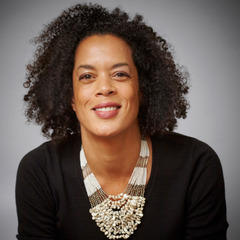
Author

Aminatta Forna
Aminatta Forna

Aminatta Forna is a British author of Sierra Leonean origin, renowned for her fiction and non-fiction works that explore themes of identity, memory, and the African diaspora. Born in 1964, she has penned several novels and essays that reflect her own experiences as a woman of African descent living in the UK. more

You May Also Like

“The winds and seas, the powers of water and earth an light, all that these do, and all that the beasts and green things do, is well done, and rightly done. All these act within the Equilibrium. From the hurricane and the great whale's sounding to the fall of a dry leaf and the gnat's flight, all they do is done within the balance of the whole. But we, insofar as we have power over the world and over one another, we must learn to do what the leaf and the whale and the wind do of their own nature. We must learn to keep the balance. Having intelligence, we must not act in ignorance. Having choice, we must not act without responsibility.”

“By morning, Adelaide was beginning to understand why she'd never completely understood how God worked. Given that He had made the bewildering, maddening, incomprehensible species that was man from His own image, it stood to reason that the Creator would be a complicated mass of logic never meant to be understood by the female mind. That, or the fall of man in the Garden of Eden had taken them even further off the path than she'd ever realized”

“Man is now a new animal, a new and different animal; he can jump a hundred miles, see through brick walls, bombard atoms, analyse the stars, set about his business with the strength of a million horses. And so forth and so on. Yes. Yes. But all the same he goes on behaving like the weak little needy ape he used to be. He grabs, snarls, quarrels, fears, stampedes, and plays in his immense powder magazine until he seems likely to blow up the whole damned show.”

“Common sense and every material reality insisted upon the unification of human life throughout the planet and the socialisation of its elementary needs, and pitted against that was the fact that every authority, every institution, every established way of thinking and living was framed to preserve the advantages of the ruling and possessing minority and the separate sovereignty of the militant states that had been evolved within the vanished circumstances of the past.”

“Mankind has created many religions; most of them are long gone now and finally all will long gone! This truth is an irreversible truth!”

“Colonialism demands history begin past the point of colonization precisely because, under those narrative conditions, the colonist’s every action is necessarily one of self-defense. The story begins not when the wagons arrive, but only after they are circled. In this telling, fear is the exclusive property of only one people, and the notion that the occupied might fear the doing of their occupier is as fantastical as the notion that barbarians might be afraid of the gate. Any population on whom this asymmetry is imposed will always be the instigators, the cause of what is and, simultaneously, the justification for what will be. The savage outside does, the civilized center must respond. How does one finish the sentence: "It is unfortunate that tens of thousands of children are dead, but…" Ignore for a moment that the number is an approximation. Ignore the many more children mutilated, orphaned, left to scream under the rubble. Ignore the construction of the sentence itself, its dark similarities to the language of every abuser—You made me do this. Ignore all of this and think about how you would finish this sentence that has now been uttered in one form or another by so many otherwise deeply empathetic Western liberals. How to finish it and still be able to sleep at night. Surely, many people have, and their answers might relate to terrorists or revenge or an all-encompassing right to self-defense. But trimmed to its most basic language, every proposed conclusion to that sentence is some variant of the same basic thesis: They would have killed more of ours. What does unlimited fear cost? What will sate it?”