Quotessence
Home / Quotes / Quote by Sigmund Freud

Quote by Sigmund Freud

“If we turn to those restrictions that only apply to certain classes of society, we encounter a state of things which is glaringly obvious and has always been recognized. It is to be expected that the neglected classes will grudge the favoured ones their privileges and that they will do everything in their to power to rid themselves of their own surplus of privation. Where this is not possible a lasting measure of discontent will obtain within this culture, and this may lead to dangerous outbreaks. But if a culture has not got beyond the stage in which the satisfaction of one group of its members necessarily involves the suppression of another, perhaps the majority---and this is the case in all modern cultures,---it is intelligible that these suppressed classes should develop an intense hostility to the culture; a culture, whose existence they make possible by their labour, but in whose resources they have too small a share. In such conditions one must not expect to find an internalization of the cultural prohibitions among the suppressed classes; indeed they are not even prepared to acknowledge these prohibitions, intent, as they are, on the destruction of the culture itself and perhaps even of the assumptions on which it rests. These classes are so manifestly hostile to culture that on that account the more latent hostility of the better provided social strata has been overlooked. It need not be said that a culture which leaves unsatisfied and drives to rebelliousness so large a number of its members neither has a prospect of continued existence, nor deserves it.”

Quote by Sigmund Freud

Work

THE FUTURE OF AN ILLUSION

This book delves into the concepts of illusion and reality, examining their impact on human perception and understanding. more

Author
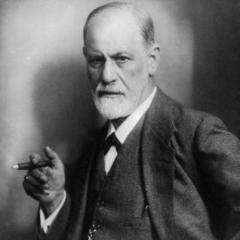
Sigmund Freud
Sigmund Freud

Sigmund Freud, born on May 6, 1856, in Moravia, and died on September 23, 1939, in London, was an Austrian neurologist and the founder of psychoanalysis. Known as the father of modern psychology, Freud made significant contributions to the understanding of human psychology, introducing concepts such as the unconscious mind, dream analysis, and sexual theory. more

You May Also Like

“Narcissistic cathexis of the child by the mother does not exclude emotional devotion. On the contrary, she loves the child as her self-object, excessively, though not in the manner that he needs, and always on the condition that he presents his "false self." This is no obstacle to the development of intellectual abilities, but it is one to the unfolding of an authentic emotional life.”

“The process of dissociation is an elegant mechanism built into the human psychological system as a form of escape from (sometimes literally) going crazy. The problem with checking out so thoroughly is that it can leave us feeling dead inside, with little or no ability to feel our feelings in our bodies. The process of repair demands a re-association with the body, a commitment to dive into the body and feel today what we couldn’t feel yesterday because it was too dangerous.”

“In Astrology, the moon, among its other meanings, has that of "the common people," who submit (they know not why) to any independent will that can express itself with sufficient energy. The people who guillotined the mild Louis XVI died gladly for Napoleon. The impossibility of an actual democracy is due to this fact of mob-psychology. As soon as you group men, they lose their personalities. A parliament of the wisest and strongest men in the nation is liable to behave like a set of schoolboys, tearing up their desks and throwing their inkpots at each other. The only possibility of co-operation lies in discipline and autocracy, which men have sometimes established in the name of equal rights.”

“There are people who fantasize about suicide, and paradoxically, these fantasies can be soothing because they usually involve either fantasizing about others' reactions to one's suicide or imagining how death would be a relief from life's travails. In both cases, an aspect of the fantasy is to exert control, either over others' views or toward life's difficulties. The writer A. Alvarez stated, " There people ... for whom the mere idea of suicide is enough; they can continue to function efficiently and even happily provided they know they have their own, specially chosen means of escape always ready..." In her riveting 2008 memoir of bipolar disorder, Manic, Terri Cheney opened the book by stating, "People... don't understand that when you're seriously depressed, suicidal ideation can be the only thing that keeps you alive. Just knowing there's an out--even if it's bloody, even if it's permanent--makes the pain bearable for one more day." This strategy appears to be effective for some people, but only for a while. Over longer periods, fantasizing about death leaves people more depressed and thus at higher risk for suicide, as Eddie Selby, Mike Amestis, and I recently showed in a study on violent daydreaming. A strategy geared toward increased feelings of self-control (fantasizing about the effects of one's suicide) "works" momentarily, but ultimately backfires by undermining feelings of genuine self-control in the long run.”