Quotessence
Home / Quotes / Quote by Nathaniel Hawthorne

Quote by Nathaniel Hawthorne

“Our first youth is of no value; for we are never conscious of it until after it is gone. But sometimes-always, I suspect, unless one is exceedingly unfortunate-there comes a sense of second youth, gushing out of the heart's joy at being in love; or, possibly, it may come to crown some other grand festival in life, if any other such there be. This bemoaning of one's self (as you do now) over the first, careless, shallow gayety of youth departed, and this profound happiness atyouth regained,-so much deeper and richer than that we lost,-are essential to the soul's development”

Quote by Nathaniel Hawthorne

Work

The house of the seven gables

Nathaniel Hawthorne's novel is a psychological and historical narrative that delves into the dark secrets of a New England family and their ancestral home, the House of the Seven Gables, which is imbued with a sense of Gothic atmosphere and symbolism. more

Author
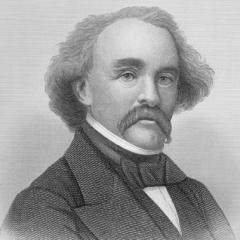
Nathaniel Hawthorne
Nathaniel Hawthorne

Nathaniel Hawthorne was an American novelist known for his Gothic novels and romantic works. His writings often delve into themes of morality and sin, influenced by his family history and Puritan background. more

You May Also Like

“Then he remembered his wedding, the old times, the first pregnancy of his wife; he, too, had been very happy the day when he had taken her from her father to his home, and had carried her off on a pillion, trotting through the snow, for it was near Christmas-time, and the country was all white. She held him by one arm, her basket hanging from the other; the wind blew the long lace of her Cauchois headdress so that it sometimes flapped across his mouth, and when he turned his head he saw near him, on his shoulder, her little rosy face, smiling silently under the gold bands of her cap. To warm her hands she put them from time to time in his breast. How long ago it all was! Their son would have been thirty by now. Then he looked back and saw nothing on the road.”

“No vulgar jealousy could separate her from Richard. But she feared time itself, and read on Lady Bruton’s face, as if it had been a dial cut in impassive stone, the dwindling of life; how year by year her share was sliced; how little the margin that remained was capable any longer of stretching, of absorbing, as in the youthful years, the colours, salts, tones of existence, so that she filled the room she entered, and felt often as she stood hesitating one moment on the threshold of her drawing-room, an exquisite suspense, such as might stay a diver before plunging while the sea darkens and brightens beneath him, and the waves which threaten to break, but only gently split their surface, roll and conceal and encrust as they just turn over the weeds with pearl.”

“Emigration was not to others the obvious remedy, the sublime conception. It was not to them ... the liberator of the pent egotism, which a strong martial woman, well nourished, well descended, of direct impulses, downright feelings, and little introspective power (broad and simple—why could not every one be broad and simple? she asked) feels rise within her, once youth is past, and must eject upon some objectit may be Emigration, it may be Emancipation; but whatever it be, this object round which the essence of her soul is daily secreted, becomes inevitably prismatic, lustrous, half looking glass, half precious stone; now carefully hidden in case people should sneer at it; now proudly displayed.”

“Soul is not even that Crackerjack prize that God and Satan scuffle over after the worms have all licked our bones. That's why, when we ponder--as sooner or later each of us must--exactly what we ought to be doing about our soul, religion is the wrong, if conventional, place to turn. Religion is little more than a transaction in which troubled people trade their souls for temporary and wholly illusionary psychological comfort--the old give-it-up-in-order-to-save-it routine. Religions lead us to believe that the soul is the ultimate family jewel and that in return for our mindless obedience, they can secure it for us in their vaults, or at least insure it against fire theft. They are mistaken.”

“A little present from my run-in with a sword. Or should I say from when the sword had a run-in with me?” His eyes lit up. “Want to see the scar? It’s cool.” He started pulling his shirt out of his pants. “Janco,” Ari warned. “We’re not supposed to be fraternizing with the Sitians.” “But she’s not Sitian. Right, Yelena? You haven’t gone south on us, have you?” Janco’s voice held mock horror. “Because if you have I can’t give you your present.” I took my switchblade out, showing the inscription to Janco. “What about ‘Sieges weathered, fight together, friends forever’? Does that change if I become an official southerner?” Janco rubbed the hair on his chin, considering. “No,” Ari said. “You could change into a goat and it would still apply.”

“Janco leaned on the threshold of my door with his face creased in annoyance. “Did she just—” “Yes.” “But I don’t—” “Yes. You do. We both stink.” “Well, I’m not—” “Yes. You are.” He huffed. “You won’t let—” “No. No complaining. Let’s go.” I grabbed a clean shirt and pants from my saddlebags. “Well, she could have handled it better,” he grumped. “No. She couldn’t.” He settled into a sulky silence as we visited the bathhouse.”