Quotessence
Home / Quotes / Quote by Charles D'Ambrosio

Quote by Charles D'Ambrosio

“Being suicidal is really tiring. A lot of suicides are so lacking in affect and so lethargic that they aren’t able to kill themselves until their mood improves—spring, for that reason, has the highest rate of what people in the business call “completed” suicides.”

Quote by Charles D'Ambrosio

Work

Loitering: New & Collected Essays

Browse quotes and source details for this work. more

Author
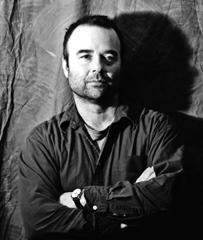
Charles D'Ambrosio
Charles D'Ambrosio

Charles D'Ambrosio is an American short story writer known for his concise and profound writing style. His works often explore themes of human relationships, moral dilemmas, and the essence of human existence. Born in 1958, D'Ambrosio's short stories have gained widespread recognition in the literary world. more

You May Also Like

“Edwards knew that the constant spending and deliberate time-wasting was taking a toll. 'I know that if I get to the end of this year I'll have no dignity left at all,' he said. 'It's all gone. I live in a big fantasy world... It's sad.' He'd often end the day drinking even more to block out the world and allow him to get to sleep.”

“Needy people are like newborns, I have come to realize. One intoxicated night and BAM! You are stuck with this problem. You finally take it home and it wants to keep you up all night and cries when it isn’t sucking on various parts of your anatomy. It wants you there for everything – rocking, feeding, burping, changing... It’s ridiculous. If I wanted a kid I would have one. Until then, grow the hell up and stand on your own two feet, you little crazy.”

“From Mencius ... "If, however, dogs and swine eat that food which should be eaten by human beings, without thought being taken to put a stop to this practice, if people starve to death on the public highways, without thought being taken as to how to help them, and if one still says, in the face of the extinction of the population, 'It is not I who am to blame for this, but the bad year'—this is just the same as if one stabs a person to death and says, 'It is not I who did this, but the sword.”

“That is why the second coming of the Lord is not only salvation, not only the omega that sets everything right, but also judgment. Indeed at this stage we can actually define the meaning of the talk of judgment. It means precisely this, that the final stage of the world is not the result of a natural current but the result of responsibility that is grounded in freedom. This must be regarded as the key to understanding why the New Testament clings fast, in spite of its message of grace, to the assertion that at the end men are judged "by their works" and that no one can escape giving an account of the way he has lived his life. There is a freedom that is not cancelled out even by grace and, indeed, is brought by it face to face with itself: man's final fate is not forced upon him regardless of the decisions he has made in his life. This assertion is in any case also necessary in order to draw the line between faith and false dogmatism or a false Christian self-confidence. This line alone confirms the equality of men by confirming the identity of their responsibility. ... Perhaps in the last analysis it is impossible to escape a paradox whose logic is completely disclosed only to the experience of a life based on faith. Anyone who entrusts himself to a life of faith becomes aware that both exist: the radical character of grace that frees helpless man and,no less, the abiding seriousness of the responsibility that summons man day after day. Both together mean that the Christian enjoys, on the one hand, the liberating, detached tranquility of him who lives on that excess of divine justice known as Jesus Christ. ... This is the source of a profound freedom, a knowledge of God's unrepentant love; he sees through all our errors and remains well disposed to us. ... At the same time, the Christian knows, however, that he is not free to do whatever he pleases, that his activity is not a game that God allows him and does not take seriously. He knows that he must answer for his actions, that he owes an account as a steward of what has been entrusted to him. There can only be responsibility where there is someone to be responsible to, someone to put the questions. Faith in the Last Judgment holds this questioning of our life over our heads so that we cannot forget it for a moment. Nothing and no one empowers us to trivialize the tremendous seriousness involved in such knowledge; it shows our life to be a serious business and precisely by doing so gives it its dignity.”

“Jesus compares the coming judgment to a fisherman who brings in his haul of fish and separates the good fish from the bad (Matthew 13:47–50). What does he do with the bad ones he doesn't want? He throws them away. He obviously doesn't torture them. They simply die. So too, Jesus says, at the final judgment angels will separate the righteous from the wicked and toss the latter into the furnace. They will go up in flames. For first-century listeners, this "destruction by fire" would not conjure up images of eternal hellfire but rather a house fire—or the execution of criminals by burning. Someone burned at the stake weeps and screams in anguish while dying. But they don't weep and scream for ten days or ten millennia or ten billion years. They die.”