“Tegularius was a willful, moody person who refused to fit into his society. Every so often he would display the liveliness of his intellect. When highly stimulated he could be entrancing; his mordant wit sparkled and he overwhelmed everyone with the audacity and richness of his sometimes somber inspirations. But basically he was incurable, for he did not want to be cured; he cared nothing for co-ordination and a place in the scheme of things. He loved nothing but his freedom, his perpetual student status, and preferred spending his whole life as the unpredictable and obstinate loner, the gifted fool and nihilist, to following the path of subordination to the hierarchy and thus attaining peace. He cared nothing for peace, had no regard for the hierarchy, hardly minded reproof and isolation. Certainly he was a most inconvenient and indigestible component in a community whose idea was harmony and orderliness. But because of this very troublesomeness and indigestibility he was, in the midst of such a limpid and prearranged little world, a constant source of vital unrest, a reproach, an admonition and warning, a spur to new, bold, forbidden, intrepid ideas, an unruly, stubborn sheep in the herd.”
Quote by Hermann Hesse
Book:The Glass Bead Game
Work
The Glass Bead Game
Browse quotes and source details for this work. more
Author
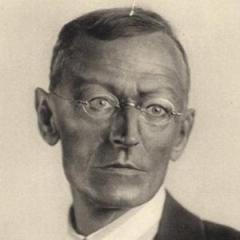
Hermann Hesse
Hermann Hesse was a German poet and novelist, born on July 2, 1877, and died on August 9, 1962. Known for his profound psychological descriptions and exploration of human nature, his works include classics such as 'Steppenwolf' and 'The Glass Bead Game'. more
You May Also Like
Source: Bangtails, Grifters, and a Liar's Kiss
Source: The Gay Science: With a Prelude in Rhymes and an Appendix of Songs
Source: The Polymorph
Source: Man's Search for Meaning
“I cannot afford to lose you, too" "You cannot lose something you do not own. Take me with you”
Source: And I Darken
Source: Industrial Society and Its Future
Source: Heir of Fire