“The man whose public spirit is prompted altogether by humanity and benevolence, will respect the established powers and privileges even of individuals, and still more those of the great orders and societies, into which the state is divided. Though he should consider some of them as in some measure abusive, he will content himself with moderating what he often cannot annihilate without great violence. When he cannot conquer the rooted prejudices of the people by reason and persuasion, he will not attempt to subdue them by force; but will religiously observe what, by Cicero, is justly called the divine maxim of Plato, never to use violence to his country no more than to his parents. He will accommodate, as well as he can, his public arrangements to the confirmed habits and prejudices of the people; and will remedy, as well as he can, the inconveniencies which may flow from the want of those regulations which the people are averse to submit to. When he cannot establish the right, he will not disdain to ameliorate the wrong; but like Solon, when he cannot establish the best system of laws, he will try to establish the best that the people can bear.”
Quote by Adam Smith
Work
Written by Adam Smith, this influential book delves into the origins and functioning of moral sentiments, offering insights into human behavior and the social order. Smith's analysis of empathy and sympathy as the foundation of moral judgments has had a lasting impact on the study of ethics and social sciences. more
Author
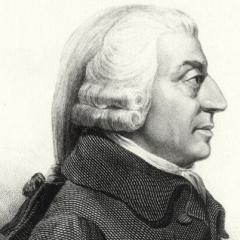
Adam Smith, a renowned philosopher and economist from Britain, was born on June 5, 1723, and died on July 17, 1790. Known as the father of modern economics, his work 'The Wealth of Nations' had a profound impact on the development of economics. more
You May Also Like
“If there are wrongs, they will be righted.”
“She's been wrong. He was no jaguar, he was a wolf.”
“Not every time does virtue reap the rewards, nor does folly always face the consequences.”