Quotessence
Home / Quotes / Quote by Lucy Parsons

Quote by Lucy Parsons

“This is the fate which awaits many of the middle class and the wage-class. What are you going to do about it? Are you going to serve notice on these thieves, and highway robbers, sitting in high places of “honor” and “trust,” that by the eternal god of justice, and by the manhood in you, that you will not, in this land of plenty, allow your children to become the mere hirelings and dependents upon the sweet will of their children?”

Quote by Lucy Parsons

Author
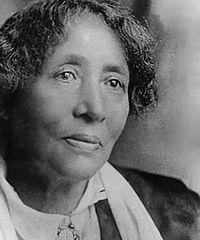
Lucy Parsons
Lucy Parsons

Lucy Parsons (1853-1942) was a prominent American feminist and socialist activist. She actively participated in labor movements and the women's rights movement, making a profound impact on American social change. more

You May Also Like

“No matter our faith, we are all here on this earth for a reason and as such, we should act as one. Not with greed, but compassion and understanding. We should also learn that we are all different and do not all have the same looks, but we should also learn that we all suffer; we all bleed; we all want the same things for our children. And it is this last reason why we should adopt change. Not to further our beliefs, but to further the lives of our children. No god will come and aid us when we are too stubborn and set in our ways to change for the better. Greed will not feed your children, but the earth will if we let her. So I ask you this; "What will you give up so that your children may live in this world?" You do not need to give up your faith, but you will need to give up your greed.”

“You know, Dad. Mom has always done everything for me since I was a baby." Jaret's assessment is accurate. Nancy has helped him with everything from daily living activities to his studies. She has been his chauffeur since Jaret doesn't have a driver's license. Most importantly, she has been his emotional bedrock. She has continuously showered him with the unconditional love necessary to build his self-esteem. But today, he showed the fruits of her years as a Super Mom. " It's my turn, Dad. I need to learn how to take care of Mom. Tell me what to do.”

“Once a little boy went to school. One morning, when the little boy had been in school a while, his teacher said: “Today we are going to make a picture.” “Good!” thought the little boy. He liked to make pictures. He could make all kinds. Lions and tigers, Chickens and cows, trains and boats, and he took out his box of crayons and began to draw. But the teacher said: “Wait! It is not time to begin!” And she waited until everyone looked ready. “Now,” said the teacher, “We are going to make flowers.” “Good!” thought the little boy, he liked to make flowers, and he began to make beautiful ones with his pink and orange and blue crayons. But the teacher said “Wait! And I will show you how.” And it was red with a green stem. “There,” said the teacher, “Now you may begin.” The little boy looked at the teacher’s. Then he looked at this own flower. He liked his flower better than the teacher’s. But he did not say this. He just turned his paper over. And made a flower like the teacher’s. It was red with a green stem. On another day, when the little boy had opened the door from the outside all by himself, the teacher said: “Today we are going to make something with clay.” “Good!” thought the little boy. Snakes and snowmen, elephants and mice, cars, and trucks, and he began to pull and pinch his ball of clay. But the teacher said: “Wait!” It is not time to begin!” And she waited until everyone looked ready. “Now,” said the teacher, “We are going to make a dish.” He liked to make dishes. And he began to make some that were all shapes and sizes. But the teacher said, “Wait! And I will show you how.” And she showed everyone how to make a deep dish. “There,” said the teacher. “Now you may begin.” The little boy looked at the teacher’s dish, then he looked at his own. He liked his dish better than the teacher’s. But he did not say this. He just rolled his clay into a big ball again. And made a dish like the teacher’s. It was a deep dish. And pretty soon the little boy learned to wait, and to watch and to make things just like the teacher. And pretty soon he didn’t make things of his own anymore. Then it happened that the little boy and his family moved to another house, in another city, and the little boy had to go to another school. And the very first day he was there the teacher said: “Today we are going to make a picture.” “Good!” Thought the little boy and he waited for the teacher to tell him what to do. But the teacher didn’t say anything. She just walked around the room. When she came to the little boy she said, “Don’t you want to make a picture?” “Yes,” said the little boy. “What are we going to make?” “I don’t know until you make it,” said the teacher. “How shall I make it?” asked the little boy. “Why, any way you like,” said the teacher. “Any color?” asked the little boy. “Any color,” said the teacher. “If everyone made the same picture, and the used the same colors, how would I know who made what?” “I don’t know,” said the little boy. And he began to make a red flower with a green stem.”

“It shook me as nothing had shaken me before. I had heard about earthquakes that engulfed thousands, about streams of burning lava that buried villages, about oceans that swallowed up islands. I had read of one million people drowned by the Yellow River, of two million drowned by the Yangtse. I knew that a million soldiers died at Verdun. But these were mere abstractions — numbers, statistics, information. One couldn't suffer for a million. But these three children I knew, I had seen with my own eyes — this was altogether different.”