Quotessence
Home / Quotes / Quote by Howard Zinn

Quote by Howard Zinn

“In 1868, the Georgia legislature voted to expel all its Negro members-two senators, twenty-five representatives-and Turner spoke to the Georgia House of Representatives (a black woman graduate student at Atlanta University later brought his speech to light): Mr. Speaker. . . I wish the members of this House to understand the position that I take. I hold that I am a member of this body. Therefore, sir, I shall neither fawn or cringe before any party, nor stoop to beg them for my rights. . . I am here to demand my rights, and to hurl thunderbolts at the men who would dare to cross the threshold of my manhood.”

Quote by Howard Zinn

Work

A People’s History of the United States: 1492 - Present

Browse quotes and source details for this work. more

Author
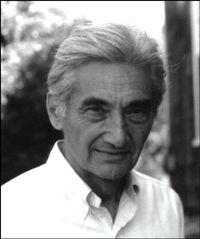
Howard Zinn
Howard Zinn

American historian known for his critical analysis of historical events and advocacy for social justice. His work emphasizes the connection between history and contemporary social issues, particularly focusing on the role of ordinary people in the historical process. more

You May Also Like

“[T]hat afternoon, Sergei Lavrov called me for the second time during the crisis. [...] “We have three demands,” he said. “What are they?” I asked. “The first two are that the Georgians sign the no-use-of-force pledge and that their troops return to barracks,” he told me. “Done,” I answered. [...] But then Sergei said, “The other demand is just between us. Misha Saakashvili has to go.” I couldn’t believe my ears and I reacted out of instinct, not analysis. “Sergei, the secretary of state of the United States does not have a conversation with the Russian foreign minister about overthrowing a democratically elected president,” I said. “The third condition has just become public because I’m going to call everyone I can and tell them that Russia is demanding the overthrow of the Georgian president.” “I said it was between us,” he repeated. “No, it’s not between us. Everyone is going to know.” The conversation ended. I called Steve Hadley to tell him about the Russian demand. Then I called the British, the French, and several others. That afternoon the UN Security Council was meeting. I asked our representative to inform the Council as well. Lavrov was furious, saying that he’d never had a colleague divulge the contents of a diplomatic conversation. I felt I had no choice. If the Georgians wanted to punish Saakashvili for the war, they would have a chance to do it through their own constitutional processes. But the Russians had no right to insist on his removal. The whole thing had an air of the Soviet period, when Moscow had controlled the fate of leaders throughout Eastern Europe. I was certainly not going to be party to a return to those days [688].”

“On August 7, 2013, on the evening of the fifth anniversary of the war, Georgian President Mikheil Saakasvili, in a prerecorded interview on Georgia’s Rustavi-2 TV, told that he had met Putin in Moscow in February 2008 at an informal summit of the CIS. During the summit he told Putin that he was ready to say no to NATO in exchange for Russian help with the reintegration of the two breakaway territories. Saakashvili claimed “that ‘Putin did not even think for a minute” about his proposal. “[Putin] smiled and said, ‘We do not exchange your territories for your geopolitical orientation... And it meant ‘we will chop off your territories anyway.’” Saakashvili asked him to talk about the growing tensions along the borders with South Ossetia, saying, “It could not be worse than now.” “That’s when he [Putin] looked at me and said: ‘And here you are very wrong. You will see that very soon it will be much, much, much worse.’” [234]”

“On August 5, 2012, a few days before the fourth anniversary of the war, a forty-seven-minute Russian documentary film “8 Avgusta 2008. Poteryannyy den” (8 August 2008. The Lost Day) was posted on YouTube. In the film retired and active service generals accused former President Medvedev of indecisiveness and even cowardice during the conflict. They praised Putin, on the other hand, for his bold and vigorous action. According to one of Medvedev’s critics, retired Army General Yury Baluevsky, a former First Deputy Defense Minister and Chief of the General Staff, “a decision to invade Georgia was made by Putin before Medvedev was inaugurated President and Commander-in-Chief in May 2008. A detailed plan of military action was arranged and unit commanders were given specific orders in advance.” [...] After the release of the documentary film Putin confirmed that the Army General Staff had, indeed, prepared a plan of military action against Georgia. It was prepared “at the end of 2006, and I authorized it in 2007,” he said. Interestingly, Putin also said “that the decision to ‘use the armed forces’ had been considered for three days—from around 5 August,” which clearly contradicts the official Russian version that the Russian army only reacted to a Georgian attack that started on August 7. According to this plan not only heavy weaponry and troops were prepared for the invasion, but also South Ossetian paramilitary units were trained to support the Russian invading troops [234―35].”

“On September 11, 2008, during a meeting of the Valdai Club with Vladimir Putin in Sochi, Carrère d’Encausse asked Putin if he would respond positively to Kokoity’s demand for integration of South Ossetia into the Russian Federation. She wrote: “Vladimir Putin answered with the greatest firmness that such a hypothesis was excluded. He explained that if Russia in this specific case was unable to ignore the will of the Ossetian people to be independent, it was firm regarding the principles of respecting the inviolability of existing frontiers. This principle, according to him, applied without exception to the Russian Federation which could not, therefore, welcome into its midst a nation or territory that so desired.” Putin’s double-talk (he is speaking about the “inviolability of existing frontiers” just after having changed the frontiers of Georgia by brutal force) brings her to the — naive — conclusion that “the blunt refusal that was opposed to the Ossetian demand for integration into Russia makes the Russian position clear: the August intervention in Georgia... could lead to a settlement of a conflict between Georgia and its separatist minorities, [but] in no case to a dossier that was of interest to Russia.” [237]”

“The fear had precedent. Toward the end of the Civil War, having witnessed the effectiveness of the Union's 'colored troops,' a flailing Confederacy began considering an attempt to recruit blacks into its army. But in the nineteenth century, the idea of the soldier was heavily entwined with the notion of masculinity and citizenship. How could an army constituted to defend slavery, with all of its assumptions about black inferiority, turn around and declare that blacks were worthy of being invited into Confederate ranks? As it happened, they could not. 'The day you make a soldier of them is the beginning of the end of our revolution,' observed Georgia politician Howell Cobb. 'And if slaves seem good soldiers, then our whole theory of slavery is wrong.' There could be no win for white supremacy here. If blacks proved to be the cowards that 'the whole theory of slavery' painted them as, the battle would be lost. But much worse, should they fight effectively--and prove themselves capable of 'good Negro government'--then the larger war could never be won.”

“The Caucasus mountain range is probably the most variegated ethnological and linguistic area in the world. It is not a melting pot, as has been said, but a refuge area par excellence where small groups have maintained their identity throughout history. The descendants of the Mediaeval Alans, a Scythic Iranian people, live in the north Caucasus today and are called Ossetes. Iranian cultural influences were strong among the Armenians, Georgians and other peoples of the Caucasus and many times in history large parts of this area were under Persian rule. So it well deserves to be mentioned in a survey of Iran.”