Quotessence
Home / Quotes / Quote by Ta-Nehisi Coates

Quote by Ta-Nehisi Coates

“The fear had precedent. Toward the end of the Civil War, having witnessed the effectiveness of the Union's 'colored troops,' a flailing Confederacy began considering an attempt to recruit blacks into its army. But in the nineteenth century, the idea of the soldier was heavily entwined with the notion of masculinity and citizenship. How could an army constituted to defend slavery, with all of its assumptions about black inferiority, turn around and declare that blacks were worthy of being invited into Confederate ranks? As it happened, they could not. 'The day you make a soldier of them is the beginning of the end of our revolution,' observed Georgia politician Howell Cobb. 'And if slaves seem good soldiers, then our whole theory of slavery is wrong.' There could be no win for white supremacy here. If blacks proved to be the cowards that 'the whole theory of slavery' painted them as, the battle would be lost. But much worse, should they fight effectively--and prove themselves capable of 'good Negro government'--then the larger war could never be won.”

Quote by Ta-Nehisi Coates

Work

We Were Eight Years in Power: An American Tragedy

This book is a compilation of essays that delve into the political and social dynamics of the United States during a specific eight-year period. The author examines the complexities of race, identity, and power, offering insights into the political climate of the time. more

Author
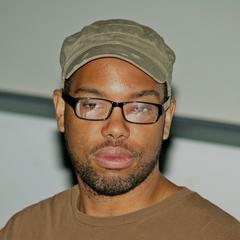
Ta-Nehisi Coates
Ta-Nehisi Coates

Ta-Nehisi Coates is an American writer known for his insightful social commentary and literary works. His writings often focus on themes of race, history, and social justice, with his most famous work being 'Between the World and Me', which won the Pulitzer Prize in 2015. more

You May Also Like

“The Caucasus mountain range is probably the most variegated ethnological and linguistic area in the world. It is not a melting pot, as has been said, but a refuge area par excellence where small groups have maintained their identity throughout history. The descendants of the Mediaeval Alans, a Scythic Iranian people, live in the north Caucasus today and are called Ossetes. Iranian cultural influences were strong among the Armenians, Georgians and other peoples of the Caucasus and many times in history large parts of this area were under Persian rule. So it well deserves to be mentioned in a survey of Iran.”

“The “Lost Day” film and the comments by Putin and Medvedev have revealed a great deal: that the invasion of Georgia in August 2008 was indeed a preplanned aggression and that so-called “Russian peacekeepers” in South Ossetia and Abkhazia were in fact the vanguard of the invading forces that were in blatant violation of Russia’s international obligations and were training and arming the separatist forces. The admission by Putin that Ossetian separatist militias acted as an integral part of the Russian military plan transfers legal responsibility for acts of ethnic cleansing of Georgian civilians and mass marauding inside and outside of South Ossetia to the Russian military and political leadership. Putin’s admission of the prewar integration of the Ossetian separatist militias into the Russian General Staff war plans puts into question the integrity of the independent European Union war report, written by Swiss diplomat Heidi Tagliavini that accused the Georgians of starting the war and attacking Russian “peacekeepers,” which, according to Tagliavini, warranted a Russian military response.”

“In the spring of 2015, Warren started the Appalachian Trail in Georgia. At age sixty-five, he was a walking contradiction. His white beard clashed with his youthful eyes, his soft, round stomach opposed his rectangular rack-solid calves, and his welcoming smile conflicted with his focused gaze. A finish in Maine would mark his eighteenth thru hike of the 2,189 mile footpath. The circumference of the earth is 24,903 miles; Warren had recorded over 36,000 miles between Springer Mountain and Katahdin.”

“At my last appointment, about a year ago, my eye doctor asked if I could still see the stars at night. It was weird when he asked because I had to think about it and I realized I couldnt answer the question. I hadnt looked up at the stars in, forever and it sort of hit me, you know? That one day I would look up and I wouldnt see a star and that would be it. I'd never be able to see something so...beautiful and simple again. Up until that moment, Id taken for granted. So, every night, I look up and see if I can see the stars.”