Quotessence
Home / Quotes / Quote by Alice Miller

Quote by Alice Miller

Work

For Your Own Good: Hidden Cruelty in Child-Rearing and the Roots of Violence

This book delves into the potential consequences of certain child-rearing methods on the formation of violent behavior in adults, offering insights into the roots of aggression and its societal implications. more

Author
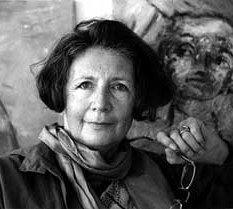
Alice Miller
Alice Miller

Alice Miller, born on January 12, 1923, and died on April 12, 2010, was a renowned psychologist. Her research focused on child psychology and the psychology of abuse, delving deeply into the psychological impact of child abuse and neglect. more

You May Also Like

“Sigmund Freud once asserted, "Let one attempt to expose a number of the most diverse people uniformly to hunger. With the increase of the imperative urge of hunger all individual differences will blur, and in their stead will appear the uniform expression of the one unstilled urge." Thank heaven, Sigmund Freud was spared knowing the concentration camps from the inside. His subjects lay on a couch designed in the plush style of Victorian culture, not in the filth of Auschwitz. There, the "individual differences" did not "blur" but, on the contrary, people became more different; people unmasked themselves, both the swine and the saints.”

“It is ironic that constructive thinkers are often misunderstood as negative, as they differ from those longing for positivity: constructive thinkers have been conditioned to find positive in negative rather than suffering from the negative in negative. Or as Paul the Apostle wrote, 'I have learned the secret to contentment in any and every circumstance.' He was right. Indeed the Lord is our strength, especially under the commandment to love one another. Otherwise we are nothing and easily thrown about by both our own and other people's mind control in a painful, mental, physical desperation to run from every thought, every thing, and every one not seeming so positive or immediately beneficial to us.”

“It would be a poor result of all our anguish and our wrestling if we won nothing but our old selves at the end of it—if we could return to the same blind loves, the same self-confident blame, the same light thoughts of human suffering, the same frivolous gossip over blighted human lives, the same feeble sense of that Unknown towards which we have sent forth irrepressible cries in our loneliness. Let us rather be thankful that our sorrow lives in us as an indestructible force, only changing its form, as forces do, and passing from pain into sympathy—the one poor word which includes all our best insight and our best love.”

“He was without any comforts of God — no feeling that God loved him — no feeling that God pitied him — no feeling that God supported him. God was his sun before — now that sun became all darkness… He was without God — he was as if he had no God. All that God had been to him before was taken from him now. He was Godless — deprived of his God. He had the feeling of the condemned, when the Judge says: “Depart from me, ye cursed,” “who shall be punished with everlasting destruction from the presence of the Lord and from the glory of his power.” He felt that God said the same to him. Ah! This is the hell which Christ suffered. The ocean of Christ’s sufferings is unfathomable… He was forsaken in the [place] of sinners. If you close with him as your surety, you will never be forsaken… “My God, my God, why hast thou forsaken me?” [The answer?] For me — for me.”