Quotessence
Home / Quotes / Quote by Jean Baudrillard

Quote by Jean Baudrillard

“The non-event is not when nothing happens. It is, rather, the realm of perpetual change, of a ceaseless updating, of an incessant succession in real time, which produces this general equivalence, this indifference, this banality that characterizes the zero degree of the event. A perpetual escalation that is also the escalation of growth - or of fashion, which is pre-eminently the field of compulsive change and built-in obsolescence. The ascendancy of models gives rise to a culture of difference that puts an end to any historical continuity. Instead of unfolding as part of a history, things have begun to succeed each other in the void. A profusion of language and images before which we are defenceless, reduced to the same powerlessness, to the same paralysis as we might show on the approach of war. It isn't a question of disinformation or brainwashing. It was a naIve error on the part of the FBI to attempt to create a Disinformation Agency for purposes of managed manipulation - a wholly useless undertaking, since disinformation comes from the very profusion of information, from its incantation, its looped repetition, which creates an empty perceptual field, a space shattered as though by a neutron bomb or by one of those devices that sucks in all the oxygen from the area of impact. It's a space where everything is pre-neutralized, including war, by the precession of images and commentaries, but this is perhaps because there is at bottom nothing to say about something that unfolds, like this war, to a relentless scenario, without a glimmer of uncertainty regarding the final outcome.”

Quote by Jean Baudrillard

Work

The Intelligence of Evil or the Lucidity Pact

Browse quotes and source details for this work. more

Author
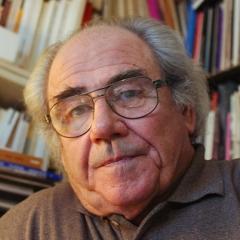
Jean Baudrillard
Jean Baudrillard

Jean Baudrillard was a French philosopher known for his critical studies on consumerism, media, and semiotics. His theories have had a profound impact on postmodernism and cultural studies. more

You May Also Like

“My hints had, undoubtedly and unintentionally, made her feel insecure, guilty, inadequate, afraid that she was losing whatever it was that turned me on; in short, it aroused all the self-doubt so readily awakened in women after thousands of years of servitude. Hence my zeal in denying the effects of time was abetted by Laura's complicity.”

“Tal como a disfunção eréctil, a disfunção intelectual, que afecta um número crescente de ilustres membros das elites intelectualóides, caracteriza-se pela impotência de manter erecto um pensamento coerente. As the erectile dysfunction, intellectual dysfunction, which affects a growing number of distinguished members of the elites, is characterized by the impotence of keeping erect a coherent thought.”

“The whole of his life was only one long protest against his lack of importance: that, I’m sure, was what drove him to kill so many magnificent animals — some of the finest and most powerful in creation. One day, I won the confidence of a writer who comes regularly to Africa to kill his ration of elephants, lions and rhino. I had asked him where he got this need and he had had enough to drink to make him sincere: ‘All my life I’ve been half-dead with fear. Fear of living, fear of dying, fear of illness, fear of becoming impotent, fear of the inevitable physical decline. When it becomes intolerable, I come to Africa, and all my dread, all my fear, is concentrated on the charging rhino, on the lion rising slowly in front of me out of the grass, on the elephant that swerves in my direction. Then at last my dread becomes something tangible, something I can kill. I shoot, and for a while I’m delivered, I have complete peace, the animal has taken away with him in his sudden death all my accumulated terrors — for a few hours I’m rid of them. At the end of six weeks it amounts to a real cure.’ I’m sure there was something of that in Orsini — but above all, there was a violent protest against the smallness and impotence of being a man, the smallness and impotence of being Orsini. He had to kill a lot of elephants and lions to compensate for that.”

“Not that I had any intention of accosting him to propose any practical agreement. That would have demanded on Laura's part a degree of devotion, of understanding, a detached view of the purely animal act of love, such as could not be expected of so young a woman who was so subject conventions of comportment in a society that had always shown itself incapable of differentiating between love and sexuality.”

“There is something worse than being unmasked: not being unmasked. Thus the crime will have kept on leaving clues, and illusion itself cannot bear to remain illusion. It is constantly prostituting itself to the world and actualizing itself in full view. Thinking is as difficult as walking in the snow without leaving tracks. Or else you have to go back over your tracks step by step, like the child in The Shining, pursued by his father in the labyrinth of ice. Political power exists only because we want absolutely none of it. And the political sphere is there only to mask this defection on our part by a trompe-l'oeil system of representation. But life, such as it is, we want too. And force, potency. That too we want, irresistibly. But perhaps less deeply than we want its opposite.”

“The champions of the digital adopt an absurd line of argument (absurd in the sense of Freud's story of the kettle): 1. It is a revolution, an absolute advance. 2. At any rate, we have no choice, the process is irreversible. But it must be one or the other: if it is inevitable, there's no point representing it as an ideal dimension. And if it's destined to win out, there's no point claiming it is best. Any form of irony or offhandedness about one's own ideas is wounding to one's interlocutor.”

“The most beautiful of all photographs are those taken of savages in their natural surroundings. The savage is always confronting death, and he confronts the lens in exactly the same manner. He does not ham it up, nor is he indifferent. He always poses; he faces up to the camera. His achievement is to transform this technical operation into a face-to-face confrontation with death. This is what makes these pictures such powerful and intense photographic objects. As soon as the lens fails to capture this pose, this provocative obscenity of the object facing death, as soon as the subject begins to collude with the lens, and the photographer too becomes subjective, the 'great game' of photography is over. Exoticism is dead. Today it is very hard indeed to find a subject - or even an object - that does not collude with the camera lens. The only trick here, generally speaking, is to be ignorant of how one's subjects live. This gives them a certain aura of mystery, a savagery, which the successful picture captures. It also captures a gleam of ingenuity, of fatality, in their faces, betraying the fact that they do not know who they are or how they live. A glow of impotence and awe that is completely lacking in our tribes of worldly, devious, fashion-conscious and self-regarding people, always well-versed in the subject of themselves - and hence devoid of all mystery. For such people the camera is merciless.”

“He was so staggered that he started to laugh, but his laughter subsided almost at once, and in its place he felt a wave of fury and despair roll over him at the sheer inexorability of late-capitalist degradation not just of the environment, not just of civic institutions, not just of intellectual and political ideals, but worse, of his own expectations, of what he even felt was possible any more—a familiar surge of grief and helpless rage at the reckless, wasteful, soulless, narcissistic, barren selfishness of the present day, and at his own political irrelevance and impotence, and at the utter shamelessness with which his natural inheritance, his future, had been either sold or laid to waste by his parents’ generation, trapping him in a perpetual adolescence that was further heightened by the infantilising unreality of the Internet as it encroached upon, and colonised, real life—‘real life,’ Tony thought, with bitter air quotes, for late capitalism would admit nothing ‘real’ beyond the logic of late capitalism itself, having declared self-interest the only universal, and profit motive the only absolute, and deriding everything that did not serve its ends as either a contemptible weakness or a fantasy.”