Quotessence
Home / Quotes / Quote by Kristi Noem

Quote by Kristi Noem

“Yes, American history is complicated and hard. All history is complicated and hard. Human life, past and present, is never simple. Every family history is checkered, to some extent, and with great inheritances come humbling challenges. But I believe Americans are brave enough to face those challenges, to overcome adversity, celebrate our triumphs---to be a teachable people who learns from our history and goes confidently into the future with, as Lincoln said, "malice toward none and charity for all.”

Quote by Kristi Noem

Work

Not My First Rodeo: Lessons from the Heartland

Browse quotes and source details for this work. more

Author
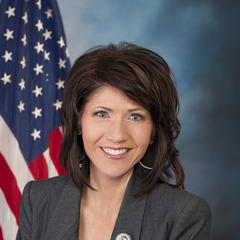
Kristi Noem
Kristi Noem

Kristi Noem is an American politician currently serving as the U.S. Representative for South Dakota's At-large congressional district. Born on November 30, 1971, she has been representing the district since 2011. Noem is known for her conservative stance and focus on issues such as agriculture, energy, and taxation. more

You May Also Like

“She walks the same paths where her father walked, and her grandfather, and her great-grandfather before her. She passes by familiar trees, the towering silent witnesses to over two centuries of history. Many of these majestic woodland giants, like faithful old friends, proudly bear the telltale tap-marks, remnants of a multi-generational maple harvest.”

“When I asked Grandma about it she told me in her own way . . .she wanted me to know that each time I looked at my quilt it would remind me to be compassionate with other and identify with their struggles. I remember her exact words, same ones she repeated so many times: "Chile, Grandma never wants you to look at the bad in folks and go backwards. I wants you to look at the good in them and go forward. If you jest look at the bad you gonna fine zactly what you lookin' for. Even the worse folks got a speck of good, you jest gotta fine it.”

“We know that now. Vehicles of transportation include, according to the scholar of memory studies Marianne Hirsch, "narratives, actions and symptoms." The stories we tell and don't tell, the actions we take and don't take, the symptoms expressed by a mother holding the trauma tightly to herself, because she refused to burden her children with it.”

“But guilt at the missing details hampered my ability to remember, forced me to put off asking more detailed questions. It was already clear that I would one day (when I became that better version of myself) open a special notebook and sit down with my mother, and she would start at the very beginning, and then there would be some meaning to it all – and a system, a family tree, and every cousin and nephew would be in their rightful place, and at the end of it there would be a book.”

“My blissful childhood was shattered without warning when I was about ten years old. One day, my father told me that he had spent seventeen years of his life in prisons, Gulag labor camps, and internal exile. At that moment, his confession became the greatest shock I had ever experienced. “My father — the kindest and wisest man on earth — and suddenly this?” I refused to believe my own ears. But my dad did not stop at the bare fact. He spoke of hunger, of cruelty, of utter powerlessness — and of his own horrific existence within a totalitarian, inhuman system. — Volodymyr Shablia, Stone. Book One. Author's Preface Context note: This passage comes from the author’s preface and reflects a real childhood revelation that became the moral and emotional foundation of the novel. Learning that his father had survived years of prisons, labor camps, and exile under the Soviet totalitarian system, the author transformed personal memory into a literary quest to understand repression, trauma, and human endurance.”

“History is often told through grand events and famous names. I wanted to tell a story about the people who rarely make the headlines—the ones who got up every day, did the work in front of them, and quietly moved the world forward one field, one family, one small-town decision at a time.”