Quotessence
Home / Quotes / Quote by Albert Camus

Quote by Albert Camus

“L'ordre, par malheur, exige rarement de faire le bien. Le pur dynamisme doctrinal ne peut se diriger vers le bien, mais seulement vers l'efficacité.”
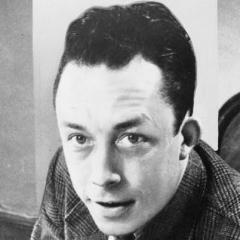
Quote by Albert Camus

Work

The Rebel

This book delves into the complex concepts of rebellion, examining its origins, motivations, and impacts on societal structures. It offers a critical analysis of the rebellious spirit and its manifestation across various historical and cultural contexts. more

Author

Albert Camus
Albert Camus

Albert Camus was a French author and philosopher, born on November 7, 1913, and died on January 4, 1960. Known for his unique existentialist philosophy and profound insights into human suffering, Camus' works include 'The Stranger', 'The Plague', and 'The Myth of Sisyphus', which have had a profound impact on 20th-century literature. more

You May Also Like

“Chaos et âge d'or sont les termes mythiques de la relation normative fondamentale, termes en relation telle qu'aucun des deux ne peut s'empêcher de virer à l'autre. Le chaos a pour rôle d'appeler, de provoquer son interruption et de devenir un ordre. Inversement, l'ordre de l'âge d'or ne peut durer, car la régularité sauvage est médiocrité ; les satisfactions y sont modestes – aurea mediocritas – parce qu'elles ne sont pas une victoire remportée sur l'obstacle de la mesure.”

“To conclude: time doesn’t pass. (I hope the reader is now convinced!) Well, what does pass, then? I shall argue that it is the conscious awareness of the fleeting self that changes from moment to moment. The misconception that time flows or passes can be traced back to the tacit assumption of a conserved self. It is natural for people to think that ‘they’ endure from moment to moment while the world changes because ‘time flows’. But as Alice remarked in Lewis Carroll’s story, ‘It’s no use going back to yesterday, because I was a different person then.’ Alice was right: ‘you’ are not the same today as you were yesterday. To be sure, there is a very strong correlation – a lot of mutual information, to get technical about it – between today’s you and yesterday’s you – a thread of information made up of memories and beliefs and desires and attitudes and other things that usually change only slowly, creating an impression of continuity. But continuity is not conservation. There are future yous correlated with (that is, observing) future states of the world, and past yous correlated with (observing) past states of the world. At each moment, the you appropriate to that world-state interprets the correlation with that state as ‘now’. It is indeed ‘now’ for ‘that you’ at ‘that time’. That’s all! The flow-of-time phenomenon reveals ‘the self’ as a slowly evolving complex pattern of stored information that can be accessed at later times and provide an informational template against which fresh perceptions can be matched. The illusion of temporal flow stems from the inevitable slight mismatches.”

“...there will be nights when they can't deal with all the space around them, the time passing, the schizophrenic burr of Father's voice in their brains. Nights in the years to come, when their stories are no longer theirs, and they can barely hear each other over the screaming headlines. Nights after everything's gone to shit and their dreams are decaying bodies in a distant place. Nights when their voices are the only thing to remind each other that the good things, love, beauty, family, still exist; that the night, endless as it seems, cannot undo their progress.”