“When we consider the major role intimidation plays in this ideology, which was still at the peak of its popularity at the turn of the century, it is not surprising that Sigmund Freud had to conceal his surprising discovery of adults' sexual abuse of their children, a discovery he was led to by the testimony of his patients. He disguised his insight with the aid of a theory that nullified this inadmissible knowledge. Children of his day were not allowed, under the severest of threats, to be aware of what adults were doing to them. and if Freud had persisted in his seduction theory, he not only would have had his introjected parents to fear but would no doubt have been discredited, and probably ostracized, by middle-class society. In order to protect himself, he had to devise a theory that would preserve appearances by attributing all “evil”, guilt and wrongdoing to the child's fantasies. in which the parents served only as the objects of projection. We can understand why this theory omitted the fact that it is the parents who not only project their sexual and aggressive fantasies onto the child but also are able to act out these fantasies because they wield the power. It is probably thanks to this omission that many professionals in the psychiatric field, themselves the products of "poisonous pedagogy" have been able to accept the Freudian theory of drives, because it did not force them to question their idealized image of their parents. With the aid of Freud's drive and structural theories, they have been able to continue obeying the commandment they internalized in early childhood: "Thou shalt not be aware of what your parents are doing to you.”
Quote by Alice Miller
Work
For Your Own Good: Hidden Cruelty in Child-Rearing and the Roots of Violence
This book delves into the potential consequences of certain child-rearing methods on the formation of violent behavior in adults, offering insights into the roots of aggression and its societal implications. more
Author
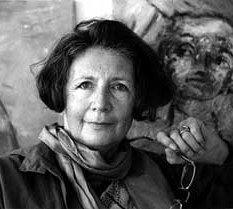
Alice Miller
Alice Miller, born on January 12, 1923, and died on April 12, 2010, was a renowned psychologist. Her research focused on child psychology and the psychology of abuse, delving deeply into the psychological impact of child abuse and neglect. more
You May Also Like
Source: Pulse
Source: Ramona and Her Mother
Source: Ramona and Her Mother
Source: Ramona Forever
“Are there any parents who can make their children completely happy?”
Source: The diary of a young girl
Source: A Spot of Bother
Source: For Your Own Good: Hidden Cruelty in Child-Rearing and the Roots of Violence
Source: Where Things Come Back
Source: Circle Mirror Transformation
Source: Family in Six Tones: A Refugee Mother, an American Daughter