Quotessence
Home / Quotes / Quote by Richard Wright

Quote by Richard Wright

“...I found out that many subjects were taboo from the white man's point of view. Among the topics they did not like to discuss with Negros were the following: American white women; the Ku Klux Klan; France, and how Negro soldiers fared while there; French women; Jack Johnson; the entire northern part of the United States; the Civil War; Abraham Lincoln; U.S. Grant; General Sherman; Catholics; the Pope; Jews; the Republican Party; slavery; social equality; Communism; Socialism; the 13th and 14th Amendments to the Constitution; or any topic calling for positive knowledge or manly self-assertion on the Part of the Negro. The most accepted topics were sex and religion.”

Quote by Richard Wright

Author
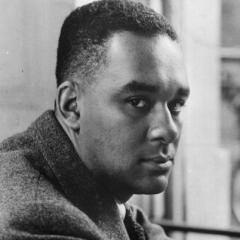
Richard Wright
Richard Wright

Richard Wright (September 4, 1908 - November 28, 1960) was an influential American author whose works profoundly exposed racial discrimination and social injustice, leaving a lasting impact on American literature. more

You May Also Like

“Because the drug war has been waged almost exclusively in poor communities of color, when drug offenders are released, they are generally returned to racially segregated ghetto communities--the places they call home. In many cities, the re-entry phenomenon is highly concentrated in a small number of neighborhoods. According to one study, during a twelve-year period, the number of prisoners returning home to "core counties"--those counties that contain the inner city of a metropolitan area--tripled. The effects are felt throughout the United States. In interviews with one hundred residents of two Tallahassee, Florida communities, researchers found that nearly every one of them had experienced or expected to experience the return of a family member from prison. Similarly, a survey of families living in the Robert Taylor Homes in Chicago found that the majority of residents either had a family member in prison or expected one to return from prison within the next two years. Fully 70 percent of men between the ages of eighteen and forty-five in the impoverished and overwhelmingly black North Lawndale neighborhood on Chicago's West Side are ex-offenders, saddled for life with a criminal record. The majority (60 percent) were incarcerated for drug offenses. These neighborhoods are a minefield for parolees, for a standard condition of parole is a promise not to associate with felons. As Paula Wolff, a senior executive at Chicago Metropolis 2020 observes, in these ghetto neighborhoods, "It is hard for a parolee to walk to the corner store to get a carton of milk without being subject to a parole violation.”

“The Society for the Colonization of Free People of Color of America, better known as the American Colonization Society was a group established in 1816 by Robert Finley of New Jersey which supported the migration of free African Americans to the continent of Africa In 1822, the American Colonization Society established a new colony on the West Coast of Africa that in 1847 became the independent nation of Liberia. By 1867, the American Colonization Society had sent more than 13,000 black emigrants to this new country. Beginning in the 1830’s the society was harshly attacked by abolitionists, who tried to discredit colonization as a scheme perpetrated by the slaveholder’s to rid themselves of any responsibility regarding the freeing of their former slaves. Of course this was true prior to the Civil War and laterr during the “Jim Crow” era! The concept had a sizable following of, southern whites, who thought of this as a way to rid America of a growing black population. Others felt that since the slaves were brought to America against their will that it was only right that they be returned to Africa. Paul Cuffee and other free Blacks petitioned the Massachusetts government to either give African and Native Americans the right to vote or to stop taxing them. Cuffee also advocated the return to Africa of freed slaves. Some years later, after the Civil War, many freed blacks actually wanted to go to the new country of Liberia to make a better life for themselves, however the money necessary to send them back, as could be expected, dried up. The entire program came to an end during the latter part of the 19th century when the American Colonization Society stopped transporting former slaves to West Africa and concentrated instead on educational and missionary efforts. Those blacks that did come from the United States and populated Liberia became known as the Americo-Liberians who soon become the ruling class of Liberia.”

“By the turn of the twentieth century, every state in the South had laws on the books that disenfranchised blacks and discriminated against them in virtually ever sphere of life, lending sanction to a racial ostracism that extended to schools, churches, housing, jobs, restrooms, hotels, restaurants, hospitals, orphanages, prisons, funeral homes, morgues, and cemeteries. Politicians competed with each other by proposing and passing every more stringent, oppressive, and downright ridiculous legislation (such as laws specifically prohibiting blacks and whites from playing chess together.)”

“In the era of colorblindness, it is no longer socially permissible to use race, explicitly, as a justification for discrimination, exclusion, and social contempt. So we don’t. Rather than rely on race, we use our criminal justice system to label people of color 'criminals' and then engage in all the practices we supposedly left behind.”