Quotessence
Home / Quotes / Quote by Franz Kafka

Quote by Franz Kafka

Work

The Metamorphosis

Franz Kafka's 'The Metamorphosis' is a novella that delves into the psychological and social impact of sudden and extreme transformation. The narrative follows Gregor Samsa, a traveling salesman, who wakes up one morning to find himself transformed into a monstrous insect. The story examines the struggle for identity and the alienation experienced by Gregor in a world that cannot comprehend his metamorphosis. Kafka's work is renowned for its complex and haunting portrayal of the human condition, often reflecting the anxieties and existential concerns of modern life. more
Author

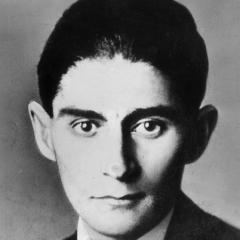
Franz Kafka
Franz Kafka

Franz Kafka (July 3, 1883 - June 3, 1924) was an important German-language novelist of the 20th century, known for his unique literary style and profound philosophical thoughts. His works, often themed around loneliness, alienation, and existentialism, have had a profound impact on literature and philosophy. more

You May Also Like

“If your parents’ faces never lit up when they looked at you, it’s hard to know what it feels like to be loved and cherished. If you come from an incomprehensible world filled with secrecy and fear, it’s almost impossible to find the words to express what you have endured. If you grew up unwanted and ignored, it is a major challenge to develop a visceral sense of agency and self-worth.”

“In response to threat and injury, animals, including humans, execute biologically based, non-conscious action patterns that prepare them to meet the threat and defend themselves. The very structure of trauma, including activation, dissociation and freezing are based on the evolution of survival behaviors. When threatened or injured, all animals draw from a "library" of possible responses. We orient, dodge, duck, stiffen, brace, retract, fight, flee, freeze, collapse, etc. All of these coordinated responses are somatically based- they are things that the body does to protect and defend itself. It is when these orienting and defending responses are overwhelmed that we see trauma. The bodies of traumatized people portray "snapshots" of their unsuccessful attempts to defend themselves in the face of threat and injury. Trauma is a highly activated incomplete biological response to threat, frozen in time. For example, when we prepare to fight or to flee, muscles throughout our entire body are tensed in specific patterns of high energy readiness. When we are unable to complete the appropriate actions, we fail to discharge the tremendous energy generated by our survival preparations. This energy becomes fixed in specific patterns of neuromuscular readiness. The person then stays in a state of acute and then chronic arousal and dysfunction in the central nervous system. Traumatized people are not suffering from a disease in the normal sense of the word- they have become stuck in an aroused state. It is difficult if not impossible to function normally under these circumstances.”