Quotessence
Home / Quotes / Quote by Kenneth Clark

Quote by Kenneth Clark

“What happened? It took Gibbon six volumes to describe the decline and fall of the Roman Empire, so I shan’t embark on that. But thinking about this almost incredible episode does tell one something about the nature of civilisation. It shows that however complex and solid it seems, it is actually quite fragile. It can be destroyed. What are its enemies? Well, first of all fear — fear of war, fear of invasion, fear of plague and famine, that make it simply not worthwhile constructing things, or planting trees or even planning next year’s crops. And fear of the supernatural, which means that you daren’t question anything or change anything. The late antique world was full of meaningless rituals, mystery religions, that destroyed self-confidence. And then exhaustion, the feeling of hopelessness which can overtake people even with a high degree of material prosperity. 

There is a poem by the modern Greek poet, Cavafy, in which he imagines the people of an antique town like Alexandria waiting every day for the barbarians to come and sack the city. Finally the barbarians move off somewhere else and the city is saved; but the people are disappointed — it would have been better than nothing. Of course, civilisation requires a modicum of material prosperity—

What civilization needs:

confidence in the society in which one lives, belief in its philosophy, belief in its laws, and confidence in one’s own mental powers. The way in which the stones of the Pont du Gard are laid is not only a triumph of technical skill, but shows a vigorous belief in law and discipline. Vigour, energy, vitality: all the civilisations—or civilising epochs—have had a weight of energy behind them. People sometimes think that civilisation consists in fine sensibilities and good conversations and all that. These can be among the agreeable results of civilisation, but they are not what make a civilisation, and a society can have these amenities and yet be dead and rigid.”

Quote by Kenneth Clark

Work

Civilisation

This book delves into the evolution of human societies, examining various aspects of civilization such as art, architecture, religion, and social structures across different eras and regions. more

Author
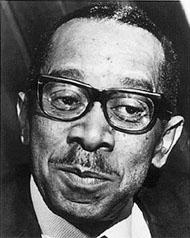
Kenneth Clark
Kenneth Clark

Kenneth Clark was a renowned psychologist, born on July 24, 1914, and passed away on May 1, 2005. He made significant contributions to the field of psychology, particularly in the areas of cognitive psychology and child psychology. more

You May Also Like

“Yong is the outer manifestation of something. Ti is the underlying essence. Technology is a yong associated with a particular ti that is ... Western, and completely alien to us [the Chinese]. For centuries, since the time of the Opium Wars, we have struggled to absorb the yong of technology without importing the Western ti. But it has been impossible. Just as our ancestors could not open our ports to the West without accepting the poison of opium, we could not open our lives to Western technology without taking in the Western ideas, which have been as a plague on our society. The result has been centuries of chaos.”

“He needed the people and the clamour around him. There was no questions and no doubts when he stood on a platform over a sea of faces; the air was heavy, compact, saturated with a single solvent-admiration; there was no room for anything else. He was great; great as the number of people who told him so. He was right; right as the number of people who believed it. He looked at the faces, at the eyes, he saw himself born in them, he saw himself granted the gift of life. That was Peter Keating, that, the reflection in those staring pupils, and his body was only it's reflection.”

“When we consider further the social and psychological roots of the collective urge to kill the world, we are likely to see more of ourselves in it and to begin to think of such groups as something of a dark "cultural underground" of our own society. We are also likely to discover that whatever renders our society more decent and more inclusive in its benefits is likely to undermine the totalistic impulse to destroy everything.”

“She had always thought that if only people could communicate mind-to-mind, eliminating the ambiguities of language, then understanding would be perfect and there'd be no more needless conflicts. Instead she had discovered that rather than magnifying differences between people, language might just as easily soften them, minimize them, smooth things over so that people could get along even though they really didn't understand each other. The illusion of comprehension allowed people to think they were more alike than they really were. Maybe language was better.”

“He tans into burning while the opening fanfare to "Peaches en Regalia" flows over him, the bugle call for a hippie army that marched at the peak of the American parabola, that moment when physics held its breath to allow levitation, a small reward before the descent. The hippies knew it then, Maggot Boy Johnson thinks; they couldn't build it into words but they could feel it; a floating in the stomach as history shifted direction. They stopped, hey, what's that sound, and knew that the spiny skyscrapers reflected in the river, the chasms of concrete, the wide streets and sidewalks, the power lines cutting into the hills and mountains above missile silos, the highways drawing lines across the blank plains under enormous skies, the pupil of God's eye, would be the ruins that their grandchildren wandered among, the reminders that once there was always water in the faucet, there was electricity all the time, and America was prying off the shackles of its past. The vision opened up to them and winked out again, and those it blinded staggered through their lives unable to see anything else, while the rest of them wondered if they had only dreamed it.”