Quotessence
Home / Quotes / Quote by Rollo May

Quote by Rollo May

“I recall a discussion with a highly-respected psychotherapist colleague and friend on the significance of the tragedy of Romeo and Juliet. My friend stated that the trouble with Romeo and Juliet was that they hadn't had adequate counseling. If they had had, they would not have committed suicide. Taken aback, I protested that I didn't think that was Shakespeare's point at all, and that Shakespeare, as well as the other classical writers who have created and molded the literature which speaks to us age after age, is in this drama picturing how sexual love can grasp a man and woman and hurl them into heights and depths—the simultaneous presence of which we call tragic. But my friend insisted that tragedy was a negative state and we, with our scientific enlightenment, had superseded it—or at least ought to at the earliest possible moment. I argued with him, as I do here, that to see the tragic in merely negative terms is a profound misunderstanding. Far from being a negation of life and love, the tragic is an ennobling and deepening aspect of our experience of sexuality and love. An appreciation of the tragic not only can help us avoid some egregious oversimplifications in life, but it can specifically protect us against the danger that sex and love will be banalized also in psychotherapy.”

Quote by Rollo May

Work

Love and will

This book delves into the intricate relationship between love and will, examining how these two forces shape human interactions and personal growth. The author explores various aspects of love, including its emotional, psychological, and philosophical dimensions, while also analyzing the role of will in fostering meaningful connections and personal development. more

Author
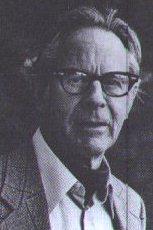
Rollo May
Rollo May

Rollo May was an American psychologist born on April 21, 1909, and died on October 22, 1994. He was a significant figure in existential psychology and is considered one of the pioneers of the field. more

You May Also Like

“Their hands were on each other—on Zee with her curated boyish look and Noelle with her carefully feminine look that was slightly tempered by the nearly shaved head and prominent hipbones and the careful comportment, giving her the quality of one of those artist’s mannequins. The arms and leges could be rearranged any way you liked, link by link, and this was what sex was too, when power was fluid. You could rearrange the other person, and the could rearrange you.”

“Nothing happened. I did not expect anything to happen. I was something that lay under the sun and felt it, like the pumpkins, and I did not want to be anything more. I was entirely happy. Perhaps we feel like that when we die and become a pert of something entire, whether it is sun and air, or goodness and knowledge. At any rate, that is happiness; to be dissolved into something complete and great. When it comes to one, it comes as naturally as sleep”

“One morning, when she was in bed with Harry in his hotel room, he tapped Faith lightly on the nose and said, “You’ve got a big honker, don’t you. But you’re so sexy, you can carry it.” She said nothing. It h rut her, not because it was untrue—she did have a strong nose, and it did look pretty good on her. It hurt her because she had been lying relaxed with him, similar to the way her childhood dog Lucky would sometimes lie in deep sleep on her back, paws up and dipped at the wrist. Her dog, lying like that, was happy in her dogfish openness. Which, Faith thought, was all she herself really wanted when she went to bed with someone. To lie exposed and free and unself-conscious.”

“Alex Roentgen stared at Jared, mildly incredulous. ::You actually need a reason to have an orgy?:: Jared began to respond, but Roentgen held up his hand. ::One, because we’ve been through the valley of the shadow of death and come through the other side. And there’s no better way to feel alive than this. And after the shit we’ve seen today, we need to get our minds off it right quick. Two, because as great as sex is, it’s even better when everyone you’re integrated with is doing it at the same time.::”

“Our patients predict the culture by living out consciously what the masses of people are able to keep unconscious for the time being. The neurotic is cast by destiny into a Cassandra role. In vain does Cassandra, sitting on the steps of the palace at Mycenae when Agamemnon brings her back from Troy, cry, “Oh for the nightingale’s pure song and a fate like hers!” She knows, in her ill-starred life, that “the pain flooding the song of sorrow is [hers] alone,” and that she must predict the doom she sees will occur there. The Mycenaeans speak of her as mad, but they also believe she does speak the truth, and that she has a special power to anticipate events. Today, the person with psychological problems bears the burdens of the conflicts of the times in his blood, and is fated to predict in his actions and struggles the issues which will later erupt on all sides in the society. The first and clearest demonstration of this thesis is seen in the sexual problems which Freud found in his Victorian patients in the two decades before World War I. These sexual topics‒even down to the words‒were entirely denied and repressed by the accepted society at the time. But the problems burst violently forth into endemic form two decades later after World War II. In the 1920's, everybody was preoccupied with sex and its functions. Not by the furthest stretch of the imagination can anyone argue that Freud "caused" this emergence. He rather reflected and interpreted, through the data revealed by his patients, the underlying conflicts of the society, which the “normal” members could and did succeed in repressing for the time being. Neurotic problems are the language of the unconscious emerging into social awareness. A second, more minor example is seen in the great amount of hostility which was found in patients in the 1930's. This was written about by Horney, among others, and it emerged more broadly and openly as a conscious phenomenon in our society a decade later. A third major example may be seen in the problem of anxiety. In the late 1930's and early 1940's, some therapists, including myself, were impressed by the fact that in many of our patients anxiety was appearing not merely as a symptom of repression or pathology, but as a generalized character state. My research on anxiety, and that of Hobart Mowrer and others, began in the early 1940's. In those days very little concern had been shown in this country for anxiety other than as a symptom of pathology. I recall arguing in the late 1940's, in my doctoral orals, for the concept of normal anxiety, and my professors heard me with respectful silence but with considerable frowning. Predictive as the artists are, the poet W. H. Auden published his Age of Anxiety in 1947, and just after that Bernstein wrote his symphony on that theme. Camus was then writing (1947) about this “century of fear,” and Kafka already had created powerful vignettes of the coming age of anxiety in his novels, most of them as yet untranslated. The formulations of the scientific establishment, as is normal, lagged behind what our patients were trying to tell us. Thus, at the annual convention of the American Psychopathological Association in 1949 on the theme “Anxiety,” the concept of normal anxiety, presented in a paper by me, was still denied by most of the psychiatrists and psychologists present. But in the 1950's a radical change became evident; everyone was talking about anxiety and there were conferences on the problem on every hand. Now the concept of "normal" anxiety gradually became accepted in the psychiatric literature. Everybody, normal as well as neurotic, seemed aware that he was living in the “age of anxiety.” What had been presented by the artists and had appeared in our patients in the late 30's and 40's was now endemic in the land.”