“What appears in the former statue of Apollo, however, cannot simply be equated with the Olympian of the same name, who had to ensure light, contours, foreknowledge and security of form in his days of completeness. Rather, as the poem's title implies, he stands for something much older, something rising from prehistoric sources. He symbolizes a divine magma in which something of the first ordering force, as old as the world itself, becomes manifest. There is no doubt that memories of Rodin and his cyclopian work ethic had an effect on Rilke here. During his work with the great artist, he experienced what it means to work on the surfaces of bodies until they are nothing but a fabric of carefully shaped, luminous, almost seeing 'places'. A few years earlier, he had written of Rodin's sculptures that 'there were endless places, and none of them did not have something happening in them'. Each place is a point at which Apollo, the god of forms and surfaces, makes a visually intense and haptically palpable compromise with his older opponent Dionysus, the god of urges and currents. That this energized Apollo embodies a manifestation of Dionysus is indicated by the statement that the stone glistens 'like wild beasts' fur'.”
Quote by Peter Sloterdijk
Work
Du mußt dein Leben ändern
Browse quotes and source details for this work. more
Author
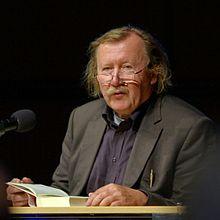
Peter Sloterdijk
Peter Sloterdijk is a German philosopher born on June 26, 1947. Known for his unique philosophical thoughts and profound insights into social culture, his works cover a wide range of fields including ethics, aesthetics, and sociology, making a significant impact on the contemporary philosophical world. more
You May Also Like
Source: Bigger than All the Night Sky: The Start of Spiritual Awakening—A Memoir
Source: Stranger in a Strange Land
Source: Du mußt dein Leben ändern
Source: Darkness Rising
“It was time to take what he wanted. And what he wanted was her.”
Source: Darkness Rising
Source: Darkness Rising
Source: Du mußt dein Leben ändern
Source: Dark Velvet