Quotessence
Home / Quotes / Quote by Charles Dickens

Quote by Charles Dickens

“Best and happiest of all, the Time before him was his own, to make amends in! ‘I will live in the Past, the Present, and the Future!’ Scrooge repeated, as he scrambled out of bed. ‘The Spirits of all Three shall strive within me. Oh Jacob Marley! Heaven, and the Christmas Time be praised for this.’” “Scrooge was better than his word. He did it all, and infinitely more; and to Tiny Tim, who did not die, he was a second father. He became as good a friend, as good a master, and as good a man, as the good old city knew, or any other good old city, town, or borough, in the good old world. Some people laughed to see the alteration in him, but he let them laugh, and little heeded them; for he was wise enough to know that nothing ever happened on this globe, for good, at which some people did not have their fill of laughter in the outset.” “And it was always said of him, that he knew how to keep Christmas well, if any man alive possessed the knowledge. May that be truly said of us, and all of us!”

Quote by Charles Dickens

Work

A Christmas Carol

Charles Dickens' 'A Christmas Carol' is a novella that explores themes of greed, charity, and the spirit of giving. The story follows Ebenezer Scrooge, a miserly and cold-hearted businessman, who is visited by the ghost of his deceased business partner, Jacob Marley, and three spirits: the Ghost of Christmas Past, the Ghost of Christmas Present, and the Ghost of Christmas Yet to Come. Through these encounters, Scrooge is shown the errors of his ways and is ultimately transformed into a more compassionate and generous individual. more

Author
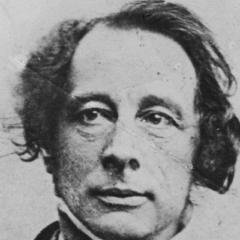
Charles Dickens
Charles Dickens

Charles Dickens, a British writer born on February 7, 1812, and died on June 9, 1870, is one of the greatest novelists of the 19th century. Known for his profound social criticism and vivid narrative style, Dickens' works extensively cover social reality, revealing various issues in the British society of the time. more

You May Also Like

“No doubt, he is horrible, he is abject, he is a shining example of moral leprosy, a mixture of ferocity and jocularity that betrays supreme misery perhaps, but is not conductive to attractiveness. He is ponderously capricious. Many of his casual opinions on people and scenery of this country are ludicrous. A desperate honesty that throbs through his confession does not absolve him from sins of diabolical cunning. He is abnormal. He is not a gentleman. But how magically his singing violin can conjure up a tendresse, a compassion for Lolita that makes us entranced with the book while abhorring it’s author!”

“The abject impulse is inalienably connected with the feminine, specifically the maternal. As it forms out of the undefined morass of relations, surfaces and currents that existed before the Oedipal or mirror-stage coordinated them, the subject seems built around a primal sense of loss. The developing sense of the limits of the body is focussed on those holes in it's surface through which the outside becomes inside and vice versa: the mouth, anus, genitals, even the invisibly porous surface of the skin. It was the mother's body that was most connected with these crossing-points, as it fed and cleaned the undefined infant body. The sense that boundaries and limits are forming around this permable flesh is interpreted then as the withdrawal or even loss, of intimacy with the body of the mother, firstly in the increasing distance of the practical hygiene operations it performs and secondly, more remotely, beyond that in it's archaic ur-form as the body through which the child entered into the world.”

“Sometimes, though no one ever asks, I say that it was moving to the East Coast that led me to understand that I was raced—to understand that the gaze upon my body bore the effects of a system far larger than me. I could no longer think of myself as a neutral subject; no one was, and in that realization there was a kind of relief. Emboldened by my reading, I began to consider my own Asian-Americanness, and within it to draw a distinction between East and Southeast Asian, finally acknowledging the effects of being a repeatedly colonized subject—the ways women who looked like me had been degraded and degraded. Because I was emphatically a brown girl fucking, I related to the term ABJECT so much that I made endless puns about it: ABJECT PERMENANCE, ABJECT STORY, ABJECT OF YOUR AFFECTION. For that was how I felt, melodramatic as it was: cast-off, objectified. Kristeva was the spotlight that illuminated my condition.”