Quotessence
Home / Quotes / Quote by Mark Frost

Quote by Mark Frost

“Jack, you can't go to school, you promised Francis you'd be on his bag tomorrow [for the 1913 US Open] Eddie whispered harshly. 'I know I did -' 'You can't do that to him, he's counting on you.' 'They caught me fair and square, Eddie, what am I supposed to do?' 'You're supposed to live up to your promises.' 'I can't do it, Eddie,' said Jack. 'Francis'll catch on with somebody else, you'll see. He'll be all right.' Eddie remained unconvinced, but nothing he said could change Jack's mind. Before he went to bed, Eddie changed the bandage on his foot; there was a fair amount of blood soaked into it. He examined the wound and decided it would stand up to what he was about to put it through. It would have to. As he lay there restlessly trying to sleep that night, Eddie Lowery, tough and tenacious beyond his size and years [10 years old], had already made up his mind that it didn't matter what his brother decided to do. Both Lowery brothers weren't going to let down Francis Ouimet.”

Quote by Mark Frost

Work

The Greatest Game Ever Played

Browse quotes and source details for this work. more

Author
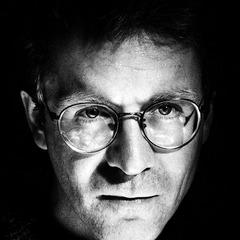
Mark Frost
Mark Frost

Mark Frost, born on November 25, 1953, is an American novelist known for his suspense and crime novels. His works have gained popularity among readers. more

You May Also Like

“Although we are in samsara, we can still see proof of the existence of buddha nature permeating all living beings. [One] way in which we can discern whether beings have buddha nature is rik (Wyl. rigs; Skt. gotra), in other words the quality we perceive in one who possesses this buddha nature. […] All beings have buddha nature because all beings have within themselves what we call the essence of the buddha, this ju (Wyl. rgyu; Skt. hetu), this seed, which can blossom into a buddha and which constitutes our potential for enlightenment.”

“Everyone thinks that it was the big strong caveman who got the girl, and for the most part, that may have been true, but physical strength doesn't explain how our species created civilization. I think there was always some scrawny dreamer sitting at the edge of the firelight, who had the ability to imagine dangers, to look into the future in his imagination and see possibilities, and therefore survived to pass his genes on to the next generation. When the big ape men ended up running off the cliff or getting killed while trying to beat a mastodon into submission with a stick, the dreamer was standing back thinking 'Hey, that might work, but you need to run the mastodon off the cliff.' And, then he'd mate with the women left over after the go-getters got killed.”

“As to Orphism, it soon blended with the worship of the god Dionysus, who originated in Thrace, and who was worshipped there in the form of a bull. Dionysus was quickly accepted in seventh-century Greece, because he was exactly what the Greeks needed to complete their pantheon of gods; under the name Bacchus he became the god of wine, and his symbol was sometimes an enormous phallus. Frazer speaks of Thracian rites involving wild dances, thrilling music and tipsy excess, and notes that such goings-on were foreign to the clear rational nature of the Greeks. But the religion still spread like wildfire throughout Greece, especially among women—indicating, perhaps, a revolt against civilisation. It became a religion of orgies; women worked themselves into a frenzy and rushed about the hills, tearing to pieces any living creature they found. Euripides’ play The Bacchae tells how King Pentheus, who opposed the religion of Bacchus, was torn to pieces by a crowd of women, which included his mother and sisters, all in ‘Bacchic frenzy.’ In their ecstasy the worshippers of Bacchus became animals, and behaved like animals, killing living creatures and eating them raw. The profound significance of all this was recognised by the philosopher Nietzsche, who declared himself a disciple of the god Dionysus. He spoke of the ‘blissful ecstasy that rises from the innermost depths of man,’ dissolving his sense of personality: in short, the sexual or magical ecstasy. He saw Dionysus as a fundamental principle of human existence; man’s need to throw off his personality, to burst the dream-bubble that surrounds him and to experience total, ecstatic affirmation of everything. In this sense, Dionysus is fundamentally the god, or patron saint, of magic. The spirit of Dionysus pervades all magic, especially the black magic of the later witch cults, with their orgiastic witch’s sabbaths so like the orgies of Dionysus’s female worshippers, even to the use of goats, the animal sacred to Dionysus. (Is it not also significant that Dionysus is a horned god, like the Christian devil?) The ‘scent of truth’ that made Ouspensky prefer books on magic to the ‘hard facts’ of daily journalism is the scent of Dionysian freedom, man’s sudden absurd glimpse of his godlike potentialities. It is also true that the spirit of Dionysus, pushed to new extremes through frustration and egomania, permeates the work of De Sade. As Philip Vellacot remarks of Dionysus in his introduction to The Bacchae: ‘But, though in the first half of the play there is some room for sympathy with Dionysus, this sympathy steadily diminishes until at the end of the play, his inhuman cruelty inspires nothing but horror.’ But this misses the point about Dionysus—that sympathy is hardly an emotion he would appreciate. He descends like a storm wind, scattering all human emotion.”