Quotessence
Home / Quotes / Quote by Maya Angelou

Quote by Maya Angelou

Work

Letter to My Daughter

This book is a collection of personal reflections and advice from a father to his daughter, covering various aspects of life, love, and personal growth. The author shares his insights and experiences, aiming to provide guidance and support as she navigates through the complexities of life. more

Author
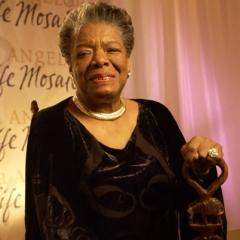
Maya Angelou
Maya Angelou

Maya Angelou was an American author, poet, playwright, actress, and lecturer, known for her profound exploration of race, gender, and culture in her work. Her autobiographical works, including 'I Know Why the Caged Bird Sings,' which detailed her early life of poverty and sexual exploitation, have gained widespread acclaim. more

You May Also Like

“I can see every day that a squirrel's perfectly at home in a world of trees. But imagine taking that squirrel and plunking him down in the middle of the desert. This wonderful animal will suddenly feel depressed, anxious, confused, completely at a loss. There are plenty of animals who make a home in the desert, but not the squirrel. There's nothing really wrong with that downcast squirrel in the desert. He's perfect. But he's only perfect when he's at home, in a place with lots of trees. In the desert a squirrel is an unhappy misfit. Now imagine doing something stupid: taking that squirrel to a therapist so he'll feel better... You could do squirrel therapy forever but as long as the squirrel's in the desert, he's going to be miserable. But if you just pick him up and bring him to a place with trees, now he's at home and he's happy. There are so many people who are miserable because they are squirrels in the desert. They think there's something wrong with them. They endlessly try to fix themselves but the fixing doesn't work. Yet they keep trying because it's hard to face the ways they're not at home in the world. And yet how simple it would be if they could see there's nothing wrong with who they are, there's just something wrong with where they are. But they can feel more at home than they ever imagined. They just have to look for ways that events in their lives are showing them the way home.”

“In Europe, the dimensions of physical space seemed compressed. The looming vertical presence of mountains cut me off from the horizon. I'd not lived with that kind of spatial curtailment before. Even a city of skyscrapers is more porous than a snowcapped range. Alps form a solid barrier, an obstacle every bit as conceptual as visual and physical. Alpine bluffs and crags just don't rear up, they lean outwards, projecting their mass, and their solidity does not relent. For a West Australian like me, whose default setting is in diametric opposition, and for whom space is the impinging force, the effect is claustrophobic. I think I was constantly and instinctively searching for distances that were unavailable, measuring space and coming up short.”

“In a seedy cinema on ru du Temple, watching Disney's Peter Pan with my son, I found that although we were all gazing at the same screen in the flickering dark, I was seeing a different film to the rest of the audience. What seemed fantastical and exotic to the Parisian kids looked like home to me. I knew secret coves and hidey-holes like those of the Lost Boys. I'd grown up in a world of rocky islands, boats and obscuring bush. To my mind the only setting that was alien - even whimsical - was the cold, lonely nursery in the Darling family attic. The wild opportunity of Neverland with its freedom from adult surveillance was deeply, warmly familiar. Watching the movie for the umpteenth time and seeing it anew, forsaking story and focusing greedily on the backdrop, I understood what a complete stranger I was in that hemisphere. But acknowledging my strangeness made those years abroad easier to digest and enjoy.”