Quotessence
Home / Quotes / Quote by Mary Roach

Quote by Mary Roach

Work

Packing for Mars: The Curious Science of Life in the Void

This book delves into the fascinating and complex aspects of preparing for human habitation on Mars, examining the scientific and practical considerations involved in sustaining life in the harsh Martian environment. more

Author
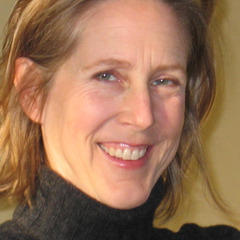
Mary Roach
Mary Roach

Mary Roach is an American author known for her in-depth exploration of science and technology. Her works are characterized by their humorous and accessible presentation of complex concepts, covering topics such as space exploration, medicine, death, and religion. Roach's books have received high praise from both academic and general readers. more

You May Also Like

“Here is the recipe to blow something up: a Pyrex bowl; potassium chloride—found at health food stores, as a salt substitute. A hydrometer. Bleach. Take the bleach and pour it into the Pyrex, put it onto a stove burner. Meanwhile, weigh out your potassium chloride and add to the bleach. Check it with the hydrometer and boil until you get a reading of 1.3. Cool to room temperature, and filter out the crystals that form. This is what you will save. [...] You need 56 grams of these reserved crystals. Mix with distilled water. Heat to a boil and cool again, saving the crystals, pure potassium chlorate. Grind these to the consistency of face powder, and heat gently to dry. Melt five parts Vaseline with five parts wax. Dissolve in gasoline and pour this liquid onto 90 parts potassium chlorate crystals in a plastic bowl. Knead. Allow the gasoline to evaporate. Mold into a cube and dip in wax to make it waterproof. This explosive requires a blasting cap of at least a grade A3.”

“A RIB is a rigid inflatable boat, and this has an engine at the rear which pushes the nose up and out of the water as it bounces along at a great speed. This was a good-sized one and I realised that it must have an antigrav component because it never sank in the water though the team of Neptunians got on with us. The marine engineer steering it took us out to the dive boat, a large – to our eyes – vessel over a mile offshore. We sat back and gripped the rope lacings along the sides and breathed in salt spray air, grinning foolishly at our friends and each other. The RIB engine was so noisy that we couldn’t really talk but we were relishing being right down at water level, streaking across the Thames estuary, heading for the most dangerous boat in the world.”

“Something, which the police called a bomb, had exploded in his shed. Investigations were begun, and the efforts of the authorities were soon to be categorized by the appropriate officals as "feverish", for bombs began to go off all over the place. The police collected fragments of the exploded bombs, and the press, anxious to help the police in their work, published impressive pictures of the fragments as well as a drawing of a reconstructed bomb together with a very detailed description of how it had been made.The police had done a really first-rate job. Even my brother and myself, both of us extremely untalented men in technical matters, could easily grasp how the bomb makers had gone to work. A large quantity of ordinary black gunpowder, such as is the be found in the cartridges sold for shoutguns, was encased in plasticine; in it was embedded an explosive cap, of the type used in hand grenades during the war, at the end of a thin wire; the other end of the wire was joined to the battery of a pocket flashlight -- obtainable at any village store -- and thence to the alarm mechanism of an ordinary alarm clock. The whole contratation was packed into a soapbox. Of course my brother did his duty as a journalist.He published the police report, together with the illustrations, on page one. It was not my brother's doing that this issue of the paper had a most spectacular success and that for weeks men were still buying it; no. the credit for that must go to the police; they had done their bit to ensure that the peasantry of Schleswig-Holstein would have a healthy occupation during the long winter evenings. Instead of just sitting and indulging in stupid thoughts, or doing crossword puzzles, or assembling to hear inflamatory speeches, the peasantery was henceforth quetly and busily engaged in procuring soapboxes and alarm clock and flashlight batteries. And then the bombs really began to go of.... Nobody ever asked me what I was actually doing in Schleswig=Holstein, save perhaps Dr. Hirschfeldt, a high official in the Prussian Ministry of the Interior, who had recently taken to frequenting Salinger's salon. Occasionally, and casually, he would glance at ne with his green eyes an honour me with a question, such as: "And what are the peasants up to in the north?" To which I would usually only reply: "Thank you for your interest. According to the statistics, the standard of living is going up -- in particular, there has been in increased demand for alarm clocks.”