Quotessence
Home / Quotes / Quote by Gustave Flaubert

Quote by Gustave Flaubert

“Un uomo, se non altro, è libero; può percorrere passioni e paesi, attraversare gli ostacoli, afferrare le gioie più remote. Ma per una donna ci sono ostacoli di ogni tipo. Inerte e flessibile insieme, ha contro di sé le debolezze della carne e le costrizioni della legge. La sua volontà, come il velo del suo cappello trattenuto da un cordoncino, palpita a tutti i venti; c’è sempre qualche desiderio che la trascina e qualche convenienza che tuttavia la trattiene.”

Quote by Gustave Flaubert

Work

madame bovary

Gustave Flaubert's Madame Bovary is a seminal work of 19th-century French literature. The novel follows the life of Emma Bovary, a woman who is discontent with her provincial life and marries Charles Bovary, a dull and unambitious country doctor. Emma's dissatisfaction leads her to seek fulfillment through romantic escapades and extramarital affairs, ultimately leading to disaster. Flaubert's meticulous attention to detail and his exploration of themes such as social class, materialism, and the human condition have made this novel a classic of world literature. more

Author

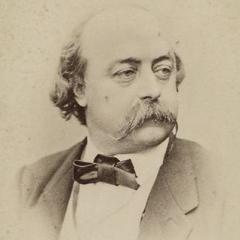
Gustave Flaubert
Gustave Flaubert

Gustave Flaubert, born on December 12, 1821 and died on May 8, 1880, was a prominent French writer of the 19th century. Known for his exquisite literary skills and profound psychological portrayals, Flaubert is best remembered for his masterpiece 'Madame Bovary'. more

You May Also Like

“Consider that the simplest social interactions between two people requires performing an astonishing array of tasks: interpreting what the other person is saying; reading body language and facial expressions; smoothly taking turns talking and listening; responding to what the other person said; assessing whether you're being understood; determining whether you're well received, and, if not, figuring out how to improve or remove yourself from the situation. Think of what it takes to juggle all this at once! And that's just a one-to-one conversation. Now imagine the multitasking required in a group setting like a dinner party. (p237)”

“There are an estimated 258 million migrants around the world, and many of us are migrating to countries that previously colonized and imperialized us. We have a human right to move, and governments should serve that right, not limit it. The unprecedented movement of people - what some call a "global migration crisis" - is, in reality, a natural progression of history. Yes, we are here because we believe in the promise of the American Dream - the search for a better life, the challenge of dreaming big. But we are also here because you were there - the cost of American imperialism and globalization, the impact of economic policies and political decisions.”

“From the Author’s Note: In 2017, a migrant died every twenty-one hours along the United States-Mexico border. That number does not include the many migrants who simply disappear each year. Worldwide in 2017, as I was finishing this novel, a migrant died every ninety minutes, in the Mediterranean, in Central Americ, in the horn of Africa. Every hour and a half. So sixteen migrant deaths for each night I tuck my children into bed. When I first began my research in 2013, these estimates were difficult to find because no one was keeping track. Even now, the International Organization for Migration warns that the available statistics are “likely only a fraction of the real number of deaths” because so many migrants who vanish are never accounted for in the first place. So maybe the number is more like two hundred deaths for each load of laundry I do. There are currently around forty thousand people reported missing across Mexico, and investigators routinely find mass graves containing dozens, sometimes hundreds, of bodies.”