Quotessence
Home / Quotes / Quote by Thomas Mann

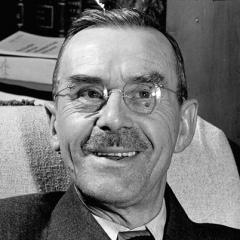
Quote by Thomas Mann

“Space, like time, gives birth to forgetfulness, but does so by removing an individual from all relationships and placing him in a free and pristine state--indeed, in but a moment it can turn a pedant and philistine into something like a vagabond. Time, they say, is water from the river Lethe, but alien air is a similar drink; and if its effects are less profound, it works all the more quickly.”

Quote by Thomas Mann

Work

The Magic Mountain

Hermann Hesse's 'The Magic Mountain' is a profound novel that takes place in a Swiss sanatorium in the early 20th century. It follows the protagonist Hans Castorp's extended stay at the institution, where he encounters a diverse array of characters and engages in introspection. The novel delves into themes of personal growth, the nature of time, and the complexities of human relationships. more

Author

Thomas Mann
Thomas Mann

Thomas Mann, born on June 6, 1875, and died on August 12, 1955, was a German novelist and one of the greatest writers of the 20th century. Known for his profound psychological portrayals and rich imagination, his works extensively covered themes such as individual and society, history and reality. His masterpieces include 'Buddenbrooks' and 'The Magic Mountain'. more

You May Also Like

“...for example, if Freud is wrong, as i and many others believe, where does that leave any number of novels and virtually the entire corpus of surrealism, Dada, and certain major forms of expressionism and abstraction, not to mention Richard Strauss' 'Freudian' operas such as Salome and Elektra, and the iconic novels of numerous writers such as D.H. Lawrence, Franz Kafka, Thomas Mann and Virginia Woolf? It doesn't render these works less beautiful or pleasurable, necessarily, but it surely dilutes their meaning. They don't owe their entire existence to psychoanalysis. But if they are robbed of a large part of their meaning, can they retain their intellectual importance and validity? Or do they become period pieces? I stress the point because the novels, paintings and operas referred to above have helped to popularise and legitimise a certain view of human nature, one that is, all evidence to the contrary lacking, wrong.”

“ბედნიერება იმაში კი არ არის, რომ უყვარდეთ; ეს გაძლევს მხოლოდ კმაყოფილების გრძნობას. იყო ბედნიერი - ნიშნავს გიყვარდეს, დაიჭირო წარმავალი, შესაძლოა მაცდური წამიერი გაელვებები, შენი სიყვარულის ობიექტის სიახლოვეს”

“Aschenbach noticed with astonishment the lad's perfect beauty. His faced recalled the noblest moment of Greek sculpture—pale, with a sweet reserve, with clustering honey-coloured ringlets, the brow and nose descending in one line, the winning mouth, the expression of pure and godlike serenity. Yet with all this chaste perfection of form it was of such unique personal charm that the observer though he had never seen, either in nature or art, anything so utterly happy and consummate.”

“Sun and sea air could not burn his skin, it was the same creamy marble hue as at first—though he did look a little pale, either from the cold or in the bluish moonlight of the arc-lamps. The shapely brows were so delicately drawn, the eyes so deeply dark—lovelier he was than words could say, and as often the thought visited Aschenbach, and brought its own pang, that language could but extol, not reproduce, the beauties of the sense.”

“The sight of that dear form was unexpected, it had appeared unhoped-for, without giving him time to compose his features. Joy, surprise, and admiration might have painted themselves quite openly upon his face - and just at this second it happened that Tadzio smiled. Smiled at Aschenbach, unabashed and friendly, a speaking, winning, captivating smile, with slowly parting lips. With such a smile it might be that Narcissus bent over the mirroring pool, a smile profound, infatuated, lingering, as he put out his arms to the reflection of his own beauty; the lips just slightly pursed, perhaps half-realizing his own folly in trying to kiss the cold lips of his shadow—with a mingling of coquetry and curiosity and a faint unease, enthralling and enthralled.”