Quotessence
Home / Quotes / Quote by Stanley Kubrick

Quote by Stanley Kubrick

Work

Stanley Kubrick: Interviews

This book delves into the thoughts, methods, and creative processes of Stanley Kubrick, offering insights into his iconic films and his approach to filmmaking. more

Author
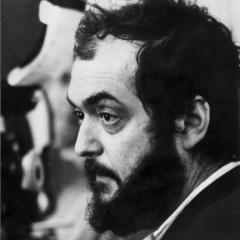
Stanley Kubrick
Stanley Kubrick

Stanley Kubrick was an American film director known for his profound understanding of the art of cinema and innovative style. His works are characterized by complex narrative structures, exquisite cinematography, and profound thematic explorations. Kubrick's films spanned a variety of genres, from war films to science fiction and psychological thrillers, each leaving a lasting impression. more

You May Also Like

“Human perfection and technical perfection are incompatible. If we strive for one, we must sacrifice the other: there is, in any case, a parting of the ways. Whoever realises this will do cleaner work one way or the other. Technical perfection strives towards the calculable, human perfection towards the incalculable. Perfect mechanisms - around which, therefore, stands an uncanny but fascinating halo of brilliance - evoke both fear and Titanic pride which will be humbled not by insight but only by catastrophe. The fear and enthusiasm we experience at the sight of perfect mechanisms are in exact contrast to the happiness we feel at the sight of a perfect work of art. We sense an attack on our integrity, on our wholeness. That arms and legs are lost or harmed is not yet the greatest danger.”

“Not without deep pain do we admit to ourselves that the artists of all ages have in their highest flights carried to heavenly transfiguration precisely those conceptions that we now recognize as false: they are the glorifiers of the religious and philosophical errors of humanity, and they could not have done this without their belief in the absolute truth of these errors. Now if the belief in such truth generally diminishes, if the rainbow colors at the outermost ends of human knowing and imagining fade: then the species of art that, like the Divina commedia, Raphael's pictures, Michelangelo's frescoes, the Gothic cathedrals, presupposes not only a cosmic, but also a metaphysical significance for art objects can never blossom again. A touching tale will come of this, that there was once such an art, such belief by artists.”

“There is a line somewhere in Wozzeck that translates out to, roughly, 'The world is awful.' Yes, I said to myself as I shot across the Bay Bridge not giving a fuck how fast I drove, that sums it up. That is high art: 'The world is awful.' That says it all. This is what we pay composers and painters and the great writers to do: tell us this; from figuring this out, they earn a living. What a masterful, incisive insight. What penetrating intelligence. A rat in a drain ditch could tell you the same thing, were it able to talk. If rats could talk, I'd do anything they said.”

“The artist is the creator of beautiful things. To reveal art and conceal the artist is art's aim. The critic is he who can translate into another manner or a new material his impression of beautiful things. The highest as the lowest form of criticism is a mode of autobiography. Those who find ugly meanings in beautiful things are corrupt without being charming. This is a fault. Those who find beautiful meanings in beautiful things are the cultivated. For these there is hope. They are the elect to whom beautiful things mean only beauty. There is no such thing as a moral or an immoral book. Books are well written, or badly written. That is all. The nineteenth century dislike of realism is the rage of Caliban seeing his own face in a glass. The nineteenth century dislike of romanticism is the rage of Caliban not seeing his own face in a glass. The moral life of man forms part of the subject-matter of the artist, but the morality of art consists in the perfect use of an imperfect medium. No artist desires to prove anything. Even things that are true can be proved. No artist has ethical sympathies. An ethical sympathy in an artist is an unpardonable mannerism of style. No artist is ever morbid. The artist can express everything. Thought and language are to the artist instruments of an art. Vice and virtue are to the artist materials for an art. From the point of view of form, the type of all the arts is the art of the musician. From the point of view of feeling, the actor's craft is the type. All art is at once surface and symbol. Those who go beneath the surface do so at their peril. Those who read the symbol do so at their peril. It is the spectator, and not life, that art really mirrors. Diversity of opinion about a work of art shows that the work is new, complex, and vital. When critics disagree, the artist is in accord with himself. We can forgive a man for making a useful thing as long as he does not admire it. The only excuse for making a useless thing is that one admires it intensely. All art is quite useless.”