Quotessence
Home / Quotes / Quote by Wilhelm Liebknecht

Quote by Wilhelm Liebknecht

“In socialist society the antagonism of interests is removed. Each develops his abilities in his own interest and thereby benefits the community. Today the personal gratification of egoism and the commonweal are for the most part antagonistic, the one excludes the other; in the new society these antagonisms are removed, the gratification, of personal egoism and the promotion of the commonweal harmoniously go hand in hand card coincide.”

Quote by Wilhelm Liebknecht

Work

On the Political Position of Social-Democracy

Browse quotes and source details for this work. more

Author
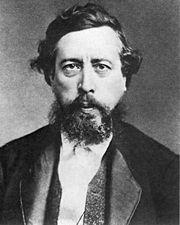
Wilhelm Liebknecht
Wilhelm Liebknecht

Wilhelm Liebknecht was a prominent German socialist and revolutionary, born on March 29, 1826, and died on August 7, 1900. He was a key figure in the socialist movement in Germany and played a significant role in the founding of the Social Democratic Party of Germany (SPD). Liebknecht was a passionate advocate for workers' rights and social equality, and his ideas had a profound impact on the political landscape of Germany. more

You May Also Like

“Wina za błędy bolszewików spada ostatecznie na międzynarodowy proletariat i przede wszystkim na bezprzykładną uporczywą nikczemność niemieckiej socjaldemokracji, partii, która za czasów pokoju udawała, że maszeruje na czele światowego proletariatu, miała czelność pouczać świat i próbowała go prowadzić, partii, która we własnym kraju liczyła przynajmniej 10 milionów zwolenników obu płci, a teraz oto od 4 lat niczym sprzedajny średniowieczny żołdak na rozkaz klas panujących 24 razy każdego dnia przybija socjalizm do krzyża.”

“It has become the central question of modern social democracy: why have working-class communities beome less supportive of our cause? Our sister parties around the world are grappling with the same question. The social-democratic project can recover but social democrats have to face up to why populist charlatans are succeeding and what we have to do to regain the initiative in rebuilding trust between urban, suburban and regional Labor communities. (p.7)”

“This American system of ours', he shouted, 'call it Americanism, call it capitalism, call it what you like, gives to each and every one of us a great opportunity if only we seize it with both hands, and make the most of it'. A month later in New York I was telling this story to Mr John Walter, minority owner of The Times. He asked me why I had not written the Capone interview for the paper. I explained that when I had come to put my notes together, I saw that most of what Capone had said was in essence identical with what was being said in the leading articles of The Times itself, and I doubted whether the paper would be best pleased to find itself seeing eye to eye with the most notorious gangster in Chicago.”

“Despite those risks, hypersexualization is ubiquitous, so visible as to be nearly invisible: it is the water in which girls swim, the air they breathe. Whatever else they might be—athletes, artists, scientists, musicians, newscasters, politicians—they learn that they must, as a female, first and foremost project sex appeal. Consider a report released by Princeton University in 2011 exploring the drop over the previous decade in public leadership positions held by female students. Among the reasons these über-elite young women gave for avoiding such roles was that being qualified was not enough. They needed to be “smart, driven, involved in many different activities (as are men), and, in addition, they are supposed to be pretty, sexy, thin, nice, and friendly.” Or, as one alumna put it, women had to “do everything, do it well, and look ‘hot’ while doing it.”

“I write to find strength. I write to become the person that hides inside me. I write to light the way through the darkness for others. I write to be seen and heard. I write to be near those I love. I write by accident, promptings, purposefully and anywhere there is paper. I write because my heart speaks a different language that someone needs to hear. I write past the embarrassment of exposure. I write because hypocrisy doesn’t need answers, rather it needs questions to heal. I write myself out of nightmares. I write because I am nostalgic, romantic and demand happy endings. I write to remember. I write knowing conversations don’t always take place. I write because speaking can’t be reread. I write to sooth a mind that races. I write because you can play on the page like a child left alone in the sand. I write because my emotions belong to the moon; high tide, low tide. I write knowing I will fall on my words, but no one will say it was for very long. I write because I want to paint the world the way I see love should be. I write to provide a legacy. I write to make sense out of senselessness. I write knowing I will be killed by my own words, stabbed by critics, crucified by both misunderstanding and understanding. I write for the haters, the lovers, the lonely, the brokenhearted and the dreamers. I write because one day someone will tell me that my emotions were not a waste of time. I write because God loves stories. I write because one day I will be gone, but what I believed and felt will live on.”