Quotessence
Home / Quotes / Quote by Ken Kesey

Quote by Ken Kesey

Work

One Flew Over the Cuckoo’s Nest

Browse quotes and source details for this work. more

Author
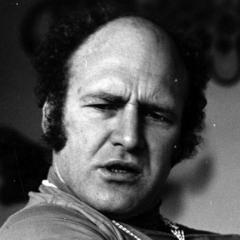
Ken Kesey
Ken Kesey

Ken Kesey was an influential American author best known for his anti-establishment novel 'One Flew Over the Cuckoo's Nest'. His works often delve into social and political issues, and are celebrated for their unique narrative style and profound insights. more

You May Also Like

“Your voice is the only alarm that I’ll actually wake up to. Your laugh is that one song they play way too much on the radio, but for some reason, I still love it. Your smile is the only thing that makes me hate mornings a little less. Your hands are my security, like knowing that even when I drive you nuts, you’re still gonna reach for me. And my arm always falls asleep when you do because I just want to be able to hold you even in your dreams.”

“For every poet knows that the sea herself has never loved, beloved, and she is thick with our tears. Only the desert knows what love is. Only the desert opens herself when the rains come, breathing in our pain, breathing out acacia and tamarisk and flowers. Only the wadi knows what it is to hold its breath. Only the wadi knows what it is to cry for joy, saying, yes, there was death here and will be death again one day, and between the two are laughter and the rhythmic breathing in of generations.”

“Arendt's laughter was the laughter of incongruence, the laughter that erupts when facing absurdity, a pause to catch one's breath. We happen upon something that makes no sense, we laugh, and respond with wit. For while laughter is a re-action, irony and wit are (spoken or written) actions. Irony expresses the unwillingness or the inability to put up with nonsense. Wit arises when people can easily and quickly see similarities between dissimilar things.”

“Laughter itself is more often than not a vital abreaction to the disgust we feel for the monstrous mixing and promiscuity that confront us. But for all that we may gag on the absence of differentiation, it still fascinates us. We love to mix everything up, even if it simultaneously repels us. The reaction whereby the organism seeks to preserve its symbolic integrity is a vital one, even if the price paid is life itself (as in the rejection of a transplanted heart). Why would bodies not resist the arbitrary swapping of organs and cells? Also: why do cells, in cancer, refuse to carry out their assigned functions?”