Quotessence
Home / Quotes / Quote by John Gardner

Quote by John Gardner

“This highest kind of truth is never something the artist takes as given. It's not his point of departure but his goal. Though the artist has beliefs, like other people, he realizes that a salient characteristic of art is its radical openness to persuasion. Even those beliefs he's surest of, the artist puts under pressure to see if they will stand.”

Quote by John Gardner

Work

The Art of Fiction: Notes on Craft for Young Writers

This book delves into the intricacies of writing fiction, providing a detailed exploration of various aspects of the craft. It is aimed at young writers seeking to improve their skills and understanding of the genre. more

Author
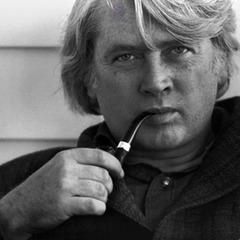
John Gardner
John Gardner

John Gardner, born on July 21, 1933, was an influential American novelist of the mid-20th century. Known for his profound character development and imaginative storytelling, his works have been highly appreciated by readers. more

You May Also Like

“The painted aircraft took on sunlight and pulse. Sweeps of color, bands and spatters, airy washes, the force of saturated light—the whole thing oddly personal, a sense of one painter’s hand moved by impulse and afterthought as much as by epic design. I hadn’t expected to register such pleasure and sensation. The air was color-scrubbed, coppers and ochers burning off the metal skin of the aircraft to exchange with the framing desert.”

“This is the essence of Rembrandt's advice to Van Hoogstraten: the authentic craft develops naturally from one's own experience. So, it seems reasonable to suggest that the search should not be for the lost secrets, but for one's own practice. This is in fact easy, you start making things. At first they might not be perfect, but the information here should provide you with a running start. And, if you are cut out for this the learning curve will not be daunting, because you will realize that you are finally headed in the right direction: towards the living craft.”

“The art historians are the real wreckers of art, Reger said. The art historians twaddle so long about art until they have killed it with their twaddle. Art is killed by the twaddle of the art historians. My God, I often think, sitting here on the settee while the art historians are driving their helpless flocks past me, what a pity about all these people who have all art driven out of them, driven out of them for good, by these very art historians. The art historians’ trade is the vilest trade there is, and a twaddling art historian, but then there are only twaddling art historians, deserves to be chased out with a whip, chased out of the world of art, Reger said, all art historians deserve to be chased out of the world of art, because art historians are the real wreckers of art and we should not allow art to be wrecked by the art historians who are really art wreckers. Listening to an art historian we feel sick, he said, by listening to an art historian we see the art he is twaddling about being ruined, with the twaddle of the art historian art shrivels and is ruined. Thousands, indeed tens of thousands of art historians wreck art by their twaddle and ruin it, he said. The art historians are the real killers of art, if we listen to an art historian we participate in the wrecking of art, wherever an art historian appears art is wrecked, that is the truth.”

“God is a person, and his universe reflects his personhood. The closer something is to the character of God, the more it reflects him and the less it can be measured. Things such as integrity, beauty, hope, and love are all in the same category as prayer. You can tell their presence and even describe them, but you can't define them, simply because they are too close to God's image.”

“Design is a fundamental human activity, relevant and useful to everyone. Anything humans create—be it product, communication or system—is a result of the process of making inspiration real. I believe in doing what works as circumstances change: quirky or unusual solutions are often good ones. Nature bends and so should we as appropriate. Nature is always right outside our door as a reference and touch point. We should use it far more than we do.”