Quotessence
Home / Quotes / Quote by Virginia Woolf

Quote by Virginia Woolf

Work

Mrs. Dalloway

Virginia Woolf's Mrs. Dalloway is a stream-of-consciousness narrative that delves into the mind of its protagonist, Clarissa Dalloway, as she prepares for a party. The novel is renowned for its innovative narrative style and its portrayal of the complexities of human consciousness and relationships. more
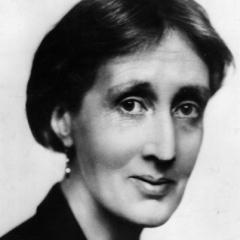
Author

Virginia Woolf
Virginia Woolf

British modernist writer, known for her unique narrative techniques and profound portrayal of female experience. Her works include 'To the Lighthouse' and 'Mrs. Dalloway'. more

You May Also Like

“I grin, and he beams with pride. “So what kind of hat is that?” I ask, unable to resist. He’s adorable when he’s showing off his wardrobe—like a puppy doing tricks. Although I remain cautious, knowing in the blink of an eye he can become a wolf again. “My Peregrination Cap,” he answers. “Huh?” His smile widens—baring white teeth. “Peregrination. An excursion … a journey.” “So, why don’t you just call it your traveling cap?” “Then it wouldn’t be much of a conversation starter, would it?” I raise an eyebrow. “Um, the fact that it’s made of living moths might give you something to talk about.” Morpheus laughs. For once our relationship feels comfortable, friendly.”

“God is Sisyphus, and existence (life) is the stone. The accomplishment of purpose is the saddest point. Sisyphus is happiest without the total accomplishment of the purpose, while he persistently works and aims at the top. The accomplishment of the purpose is Sisyphus’ fall, so he forgets his achievement quickly. Voyage contains his whole hope and beauty; the voyage is the purpose of the stone—purpose to itself alone. He always arrives in the same place but chooses voyage instead of the target. The purpose and target were always there. Voyage is always new because it is fed from oblivion by unaware memory, with infinite possibilities stemming from the nature of the absolute through “free” will and unincidental accidents or errors. Voyage is the ultimate goal or purpose because it hides an infinite multitude within itself; the infinity of the finite through endless possibilities. The beauty of infinity is always new; the voyage is the sum of happenings on the scale. Every experience or adventure is new. Beauty shines from experience.”

“What a shocking bad hat!' was the phrase that was next in vogue. No sooner had it become universal, than thousands of idle but sharp eyes were on the watch for the passenger whose hat shewed any signs, however slight, of ancient service. Immediately the cry arose, and, like the war-whoop of the Indians, was repeated by a hundred discordant throats. He was a wise man who, finding himself under these circumstances 'the observed of all observers,' bore his honours meekly. He who shewed symptoms of ill-feeling at the imputations cast upon his hat, only brought upon himself redoubled notice. The mob soon perceive whether a man is irritable, and, if of their own class, they love to make sport of him. When such a man, and with such a hat, passed in those days through a crowded neighbourhood, he might think himself fortunate if his annoyances were confined to the shouts and cries of the populace. The obnoxious hat was often snatched from his head and thrown into the gutter by some practical joker, and then raised, covered with mud, upon the end of a stick, for the admiration of the spectators, who held their sides with laughter, and exclaimed, in the pauses of their mirth, 'Oh, what a shocking bad hat!' 'What a shocking bad hat!' Many a nervous poor man, whose purse could but ill spare the outlay, doubtless purchased a new hat before the time, in order to avoid exposure in this manner.”

“Jeg har blitt latterliggjort i landets største aviser, jeg har hatt folk stående utenfor vinduet mitt og rope skjellsord, og mamma og pappa har fått lange håndskrevne brev i posten om hvor stygg og jævlig barnet deres er. Men ingenting av det kan måle seg med å stå i dusjen, helt alene, og se på sitt eget underliv og dømme seg selv.”