Quotessence
Home / Quotes / Quote by Gustav Meyrink

Quote by Gustav Meyrink

“Quand les hommes se lèvent de leur couche, ils pensent s'être débarrassés du sommeil, sans savoir qu'ils sont victimes de leurs sens et sont alors la proie d'un nouveau sommeil bien plus profond encore que celui dont ils viennent de se défaire. Il n'existe qu'une sorte de véritable état éveillé, et c'est celui dont tu es en train de t'approcher. Parle aux hommes de cet état, et ils diront de toi que tu es malade, car ils ne peuvent te comprendre. C'est pourquoi il est inutile et cruel de leur en parler.”

Quote by Gustav Meyrink

Work

The Golem

The story of a creature created by a Rabbi to protect his community, only to turn against them, exploring themes of morality, responsibility, and the nature of life. more

Author

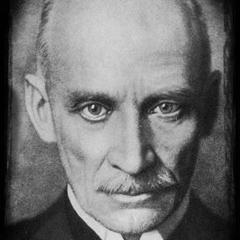
Gustav Meyrink
Gustav Meyrink

Gustav Meyrink was a German author born on January 19, 1868, and died on December 4, 1932. Known for his works on mystery and the supernatural, his novels have been beloved by readers. more

You May Also Like

“It is a small matter, but not irrelevant, that this striking mistake is commonly supported by a striking misquotation. We have all heard people cite the celebrated line of Dryden as "Great genius is to madness near allied." But Dryden did not say that great genius was to madness near allied. Dryden was a great genius himself, and knew better. It would have been hard to find a man more romantic than he, or more sensible. What Dryden said was this, "Great wits are oft to madness near allied"; and that is true. It is the pure promptitude of the intellect that is in peril of a breakdown. Also people might remember of what sort of man Dryden was talking. He was not talking of any unworldly visionary like Vaughan or George Herbert. He was talking of a cynical man of the world, a sceptic, a diplomatist, a great practical politician. Such men are indeed to madness near allied. Their incessant calculation of their own brains and other people's brains is a dangerous trade. It is always perilous to the mind to reckon up the mind. A flippant person has asked why we say, "As mad as a hatter." A more flippant person might answer that a hatter is mad because he has to measure the human head.”