Quotessence
Home / Quotes / Quote by Thomas Jefferson

Quote by Thomas Jefferson

“Whereas it appeareth that however certain forms of government are better calculated than others to protect individuals in the free exercise of their natural rights, and are at the same time themselves better guarded against degeneracy, yet experience hath shewn, that even under the best forms, those entrusted with power have, in time, and by slow operations, perverted it into tyranny; and it is believed that the most effectual means of preventing this would be, to illuminate, as far as practicable, the minds of the people at large, ....whence it becomes expedient for promoting the publick happiness that those persons, whom nature hath endowed with genius and virtue, should be rendered by liberal education worthy to receive, and able to guard the sacred deposit of the rights and liberties of their fellow citizens, and that they should be called to that charge without regard to wealth, birth or accidental condition of circumstance.”

Quote by Thomas Jefferson

Work

Thomas Jefferson: Writings

Browse quotes and source details for this work. more

Author
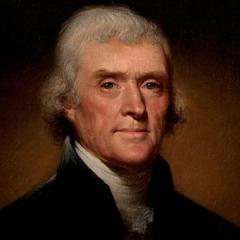
Thomas Jefferson
Thomas Jefferson

Thomas Jefferson was the third President of the United States, a distinguished politician, philosopher, architect, and scientist. He was born on April 13, 1743, and died on July 4, 1826. Jefferson advocated for democracy and freedom in politics and was one of the main authors of the Declaration of Independence. His political ideas had a profound impact on the founding and development of the United States. more

You May Also Like

“Compassion is an unstable emotion. It needs to be translated into action, or it withers. The question of what to do with the feelings that have been aroused, the knowledge that has been communicated. If one feels that there is nothing 'we' can do -- but who is that 'we'? -- and nothing 'they' can do either -- and who are 'they' -- then one starts to get bored, cynical, apathetic.”

“Many have given up. They stay home and watch the TV screen, living on the earnings of their parents, cousins, bothers, or uncles, and only leave the house to go to the movies or to the nearest bar. "How're you making it?" on may ask, running into them along the block, or in the bar. "Oh, I'm TV-ing it"; with the saddest, sweetest, most shamefaced of smiles, and from a great distance. This distance one is compelled to respect; anyone who has traveled so far will not easily be dragged again into the world. There are further retreats, of course, than the TV screen or the bar. There are those who are simply sitting on their stoops, "stoned," animated for a moment only, and hideously, by the approach of someone who may lend them the money for a "fix." Or by the approach of someone from whom they can purchase it, one of the shrewd ones, on the way to prison or just coming out.”

“If we don’t counter the onslaught of the insidious triviality of transgression in our daily environment and if we gradually lose grip on the pervading taint of apathy and disrespect, we need irrevocably restructure our thinking and adjust the mechanism of our action. Taking everything for granted and accepting anything uncontested, might generate disjunction, arouse extreme heartbreak and, finally, turn our living into a scourge. ("Even if the world goes down, my mobile will save me" turn into )”

“I suddenly felt that it was all the same to me whether the world existed or whether there had never been anything at all: I began to feel with all my being that there was nothing existing. At first I fancied that many things had existed in the past, but afterwards I guessed that there never had been anything in the past either, but that it had only seemed so for some reason. Little by little I guessed that there would be nothing in the future either. Then I left off being angry with people and almost ceased to notice them. Indeed this showed itself even in the pettiest trifles: I used, for instance, to knock against people in the street. And not so much from being lost in thought: what had I to think about? I had almost given up thinking by that time; nothing mattered to me. If at least I had solved my problems! Oh, I had not settled one of them, and how many there were! But I gave up caring about anything, and all the problems disappeared.”