Quotessence
Home / Quotes / Quote by Carlos Drummond de Andrade

Quote by Carlos Drummond de Andrade

Work

Fazendeiro do Ar

Browse quotes and source details for this work. more
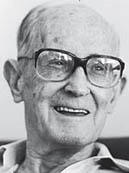
Author

Carlos Drummond de Andrade

Carlos Drummond de Andrade was a renowned Brazilian poet, born on October 31, 1902, and passed away on August 17, 1987. His poetry, known for its simplicity and clarity, has been widely appreciated in Brazil and around the world. more

You May Also Like

“In a way, what Tarantino has done with the French New Wave and with David Lynch is what Pat Boone did with rhythm and blues: He's found (ingeniously) a way to take what is ragged and distinctive and menacing about their work and homogenize it, churn it until it's smooth and cool and hygienic enough for mass consumption. Reservoir Dogs, for example, with its comically banal lunch chatter, creepily otiose code names, and intrusive soundtrack of campy pop from decades past, is a Lynch movie made commercial, i.e., fast, linear, and with what was idiosyncratically surreal now made fashionably (i.e., "hiply") surreal [...] D. Lynch is an exponentially better filmmaker than Q. Tarantino. For, unlike Tarantino, D. Lynch knows that an act of violence in an American film has, through repetition and desensitization, lost the ability to refer to anything but itself. A better way to put what I just tried to say: Quentin Tarantino is interested in watching somebody's ear getting cut off; David Lynch is interested in the ear.”

“Part of the reason I actually preferred Twin Peaks's second season to its first was the fascinating spectacle of watching a narrative structure disintegrate and a narrative artist freeze up and try to shuck and jive when the plot reached a point where his own weaknesses as an artist were going to be exposed (just imagine the fear: this disintegration was happening on national TV).”

“An academic definition of Lynchian might be that the term "refers to a particular kind of irony where the very macabre and the very mundane combine in such a way as to reveal the former's perpetual containment within the latter." But like postmodern or pornographic, Lynchian is one of those Porter Stewart-type words that's ultimately definable only ostensively-i.e., we know it when we see it. Ted Bundy wasn't particularly Lynchian, but good old Jeffrey Dahmer, with his victims' various anatomies neatly separated and stored in his fridge alongside his chocolate milk and Shedd Spread, was thoroughgoingly Lynchian. A recent homicide in Boston, in which the deacon of a South Shore church reportedly gave chase to a vehicle that bad cut him off, forced the car off the road, and shot the driver with a highpowered crossbow, was borderline Lynchian. A Rotary luncheon where everybody's got a comb-over and a polyester sport coat and is eating bland Rotarian chicken and exchanging Republican platitudes with heartfelt sincerity and yet all are either amputees or neurologically damaged or both would be more Lynchian than not.”

“I submit that the real reason we criticized and disliked Lynch's Laura's muddy bothness is that it required of us an empathetic confrontation with the exact same muddy bothness in ourselves and our intimates that makes the real world of moral selves so tense and uncomfortable, a bothness we go to the movies to get a couple hours' fucking relief from.”

“And we hate this possibility in movies; we hate this "both" shit. "Both" comes off as sloppy characterization, muddy filmmaking, lack of focus. ... But I submit that the real reason we criticized and disliked Lynch's Laura's muddy bothness is that it required of us an empathetic confrontation with the exact same muddy bothness in ourselves and our intimates that makes the real world of moral selves so tense and uncomfortable, a bothness we go to the movies to get a couple hours' fucking relief from.”

“The film is the thing. You work so hard after the ideas come to get this thing built, all the elements to feel correct, the whole to feel correct in this beautiful language called 'cinema'. And the second it's finished people want you to change it back into words. And it's very, very saddening. It's a torture. It's the film, the language of cinema. When things are concrete [there's] very few variations in interpretation. But the more abstract a thing gets, the more varied the interpretations. But people still know inside what it is for them. And even if they don't trust their intuition, I always say that if some girl named Sally... she comes out of the theatre 'I don't have a clue what that means!' She goes over with Bob and Jim to get a cup of coffee. Bob starts talking about what he thinks it is, because he knows exactly what it is, he starts talking. Five seconds later Sally 'No, no, no, no, it's not that!' And all these things come out of Sally. So, Sally really did know. For herself. That's the beauty of it. It’s just like life. You see sort of the same things, but you come up with many many different things as you go along as a detective. [...] You have everything in the film, that’s the thing. It doesn’t matter what I say. Zip! It can only be a negative. The thing is built so you don't wanna take anything away, and you don't wanna add anything to it. It's complete. That's it.”