Quotessence
Home / Quotes / Quote by Barry N. Malzberg

Quote by Barry N. Malzberg

“Inevitably, his vision verged toward the fantastic; he published a scattering of stories - most included in this volume - which appeared to conform to that genre at least to the degree that the fuller part of his vision could be seen as "mysteries." For Woolrich it all was fantastic; the clock in the tower, hand in the glove, out of control vehicle, errant gunshot which destroyed; whether destructive coincidence was masked in the "naturalistic" or the "incredible" was all pretty much the same to him. RENDEZVOUS IN BLACK, THE BRIDE WORE BLACK, NIGHTMARE are all great swollen dreams, turgid constructions of the night, obsession and grotesque outcome; to turn from these to the "fantastic" was not to turn at all. The work, as is usually the case with a major writer was perfectly formed, perfectly consistent, the vision leached into every area and pulled the book together. "Jane Brown's Body" is a suspense story. THE BRIDE WORE BLACK is science fiction. PHANTOM LADY is a gothic. RENDEZVOUS IN BLACK was a bildungsroman. It does not matter.”

Quote by Barry N. Malzberg

Work

The Fantastic Stories of Cornell Woolrich

Browse quotes and source details for this work. more

Author
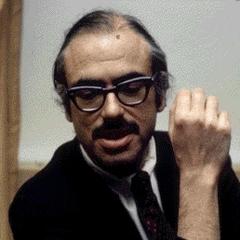
Barry N. Malzberg
Barry N. Malzberg

Barry N. Malzberg, born on July 24, 1939, is an influential American science fiction writer known for his unique literary style and profound philosophical insights. more

You May Also Like

“But suspense presupposes uncertainty. No matter how nightmarish the situation, real suspense is impossible when we know in advance that the protagonist will prevail (as we would if Woolrich had used series characters) or will be destroyed. This is why, despite his congenital pessimism, Woolrich manages any number of times to squeeze out an upbeat resolution. Precisely because we can never know whether a particular novel or story will be light or dark, allegre or noir, his work remains hauntingly suspenseful. ("Introduction")”

“One of the two owners, the man who had been sitting in the front room, was stretched out in there asleep, stockinged-toes pointed at the ceiling, one hand backed defensively against his eyes to ward off the light. He'd taken off his vest and shoes, and that strap that wasn't straight enough to be a suspender-strap was dangling now around one of the knobs at the foot of the bed. It ended in a holster, with a black, cross-grained slab of metal protruding from it. Turner couldn't take his eyes off it, while the long seconds that to him were minutes toiled by. That meant out, that black slab, more surely than any door. He had to have it. More than that, it meant a continuance of out, for so long as he had it. And he wanted out with all the desperate longing of all trapped things, blindly scratching, clawing their way through a maze to the open. To the open where the equal chance is.”

“An abusive relationship typically includes choices in partners who have histories of destructive and narcissistic behavior, and who commonly struggle with their own mental health or addictions, leaving you at risk for continuing a caregiver role. Abusive and trauma-bonded relationships are characterized by intense highs and lows, severe enmeshment, loss of identity, coercive control, and cycles of abuse and manipulation, followed by intermittent calm.”

“The hallmarks of the noir style are fear, guilt and loneliness, breakdown and despair, sexual obsession and social corruption, a sense that the world is controlled by, malignant forces preying on us, a rejection of happy endings and a preference for resolutions heavy with doom, but always redeemed by a breathtakingly vivid poetry of word (if the work was a novel or story) or image (if it was a movie). ("Introduction")”

“All we can do about this nightmare we live in is to create, if we are very lucky, a few islands of love and trust to sustain us and help us forget. But love dies while the lovers go on living, and Woolrich excels at making us watch while relationships corrode. He knew the horrors that both love and lovelessness can breed, yet he created very few irredeemably evil characters; for with whoever loves or needs love, Woolrich identifies, all of that person's dark side notwithstanding. ("Introduction")”