“Why do we like these stories so? Why do we tell them over and over? Why have we made a folk hero of a man who is the antithesis of all our official heroes, a haunted millionaire out of the West, trailing a legend of desperation and power and white sneakers? But then we have always done that. Our favorite people and our favorite stories become so not by any inherent virtue, but because they illustrate something deep in the grain, something unadmitted. Shoeless Joe Jackson, Warren Gamaliel Harding, The Titanic: how the might are fallen. Charles Lindbergh, Scott and Zelda Fitzgerald, Marilyn Monroe: the beautiful and damned. And Howard Hughes. That we have made a hero of Howard Hughes tells us something interesting about ourselves, something only dimly remembered, tells us that the secret point of money and power in AMerica is neither the things that money can buy nor power for power's sake (Americans are uneasy with their possessions, guilty about power, all of which is difficult for Europeans to perceive because they are themselves so truly materialistic, so versed in the uses of power), but absolute personal freedom, mobility, privacy. Is is the instinct which drove America to the Pacific, all through the nineteenth century, the desire to be able to find a restaurant open in case you want a sandwich, to be a free agent, live by one's own rules.”
Quote by Joan Didion
Work
This work gathers twenty essays written between 1965 and 1967, capturing the disintegration of traditional American social structures during a period of profound cultural transformation. The title essay, which lends its name to the collection, reports from San Francisco's Haight-Ashbury district at the height of the counterculture movement, documenting the collision between idealism and reality among the young people who had gathered there. Other pieces address topics including John Wayne, Howard Hughes, the wedding industry, and the author's own experiences in New York and California. The collection is recognized for its distinctive prose style—characterized by precise observation, fragmented structure, and unsparing examination of both its subjects and the author's own perspective—and for its early articulation of what would become known as New Journalism, blending reportage with personal reflection and literary technique. more
Author
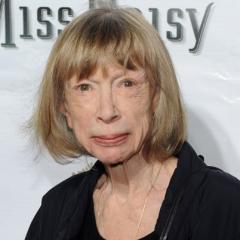
Joan Didion is an American author born on December 5, 1934. Known for her distinctive narrative style and profound insights into modern life, her works have gained recognition for their unique perspective and deep understanding of the complexities of contemporary society. more