Quotessence
Home / Quotes / Quote by John Knowles

Quote by John Knowles

“Everyone has a moment in history which belongs particularly to him. It is the moment when his emotions achieve their most powerful sway over him, and afterward when you say to this person “the world today” or “life” or “reality” he will assume that you mean this moment, even if it is fifty years past. The world, through his unleashed emotions, imprinted itself upon him, and he carries the stamp of that passing moment forever. For me, this moment—four years is a moment in history—was the war. The war was and is reality for me. I still instinctively live and think in its atmosphere. These are some of its characteristics: Franklin Delano Roosevelt is the President of the United States, and he always has been. The other two eternal world leaders are Winston Churchill and Josef Stalin. America is not, never has been, and never will be what the songs and poems call it, a land of plenty. Nylon, meat, gasoline, and steel are rare. There are too many jobs and not enough workers. Money is very easy to earn but rather hard to spend, because there isn’t very much to buy. Trains are always late and “always crowded with “servicemen.” The war will always be fought very far from America and it will never end. Nothing in America stands still for very long, including the people, who are always either leaving or on leave. People in America cry often. Sixteen is the key and crucial and natural age for a human being to be, and people of all other ages are ranged in an orderly manner ahead of and behind you as a harmonious setting for the sixteen-year-olds of this world.”

Quote by John Knowles

Work

A Separate Peace

Herman Wouk's 'A Separate Peace' explores themes of friendship, rivalry, and the complexities of human nature through the lens of a transformative summer at an East Coast prep school. The narrative follows the lives of two boys, Gene and Finny, as they navigate the challenges of adolescence and the onset of war. more

Author
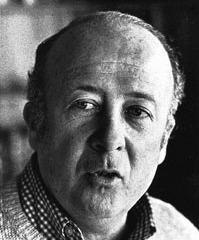
John Knowles
John Knowles

John Knowles was an American novelist born on September 16, 1926, and passed away on November 29, 2001. Known for his profound psychological portrayals and insights into American social issues, his works include the classic novel 'A Separate Peace'. more

You May Also Like

“When we came here, we came from our mothers and our sweethearts. We were still used to our mothers with their work-hard arms that could clout the strongest of us and leave our ears ringing. And we courted our sweethearts in the country way. Slow, with the fields that ripen at harvest. Fierce, with the sows that rut the earth. Here, without women, with only our imaginations and a handful of whores, we can’t remember what it is about women that can turn a man through passion into something holy. Bible words again, but I am thinking of my father, who shaded his eyes on those sunburnt evenings and learned to take his time with my mother. I am thinking of my mother with her noisy heart and of all the women waiting in the fields for the men who drowned yesterday and all the mothers’ sons who have taken their place. We never think of them here. We think of their bodies and now and then we talk about home but we don’t think of them as they are; the most solid, the best loved, the well known. They go on. Whatever we do or undo, they go on.”

“New recruits cry when they come here and they think about their mothers and their sweethearts and they think about going home. They remember what it is about home that holds their hearts; not sentiment or show but faces they love. Most of these recruits aren’t seventeen and they’re asked to do in a few weeks. What vexes the best philosophers for a lifetime; that is, to gather of their passion for life and make sense of it in the face of death. They don’t know how, but they do know how to forget, and little by little they put aside the burning summer in their body, and all they have instead is lust and rage.”

“I left the bank because they wouldn’t deposit my cheque of poems. So I went to the store, but they didn’t accept my currency of words. So I boxed all my stories and took them to charity. But they refused my donation and asked me to give blood instead. I opened the notebooks and made them look, 'What do you think I wrote these in?”

“هر یکشنبه شب، پس از مراسم شامگاه در نمازخانه ی مدرسه، چتریس نام شاگردان قدیمی را که در جنگ کشته شده بودند می خواند و زندگینامه ی کوتاهی از آنها را چاشنی سخن می کرد. بسیار هیجان انگیز بود؛ اما چیپس، نشسته بر نیمکت دراز نمازخانه، به خود می گفت: برای چتریس آنها چیزی جز نام نیستند؛ او قیافه ی آنها را آن طور که من می بینم، نمی بیند....”

“(Donor Countries) When are we going to understand that donor countries never give anything for free? When are we going to realize that only those with the largest role in destruction offer themselves as benefactors? They donate merely to reshape societies and ravaged lands according to their whims and desires… Their sole aim is to keep the defeated, the marginalized, the disempowered, and the impoverished in that state for as long as possible… When are we going to see that the quickest way to name the world’s greatest criminals is simply to scan the list of donor countries? November 12, 2022”

“A Sweet Woman from a War-Torn Country” In her exile, they often describe her as that ‘sweet woman from a war-torn country.’ They don’t know she loved smelling roses, picking spring wildflowers, and bringing them home after long walks. They don’t know about the first kiss her lover stole during a church power outage on that Easter evening— before the generators came on. They don’t know the long hours she spent under the ancient walnut tree in her village, waiting for her grandfather’s call to share freshly baked pita with ghee and honey. They don’t know about her grandmother’s mixed grains, prepared each year before Easter fasting began. In exile, they try to be kind, telling her she now lives in a ‘safe haven.’ They assume her silence comes from poor language skills or simple agreement with them. They don’t know life’s shocks have silenced her forever. Now she presses her ear against the cold window glass of her apartment, listening to the wind’s mournful cry outside. They remind her she’s among people who honor all values, beliefs, religions, and ethnicities— but she has learned it’s all too late. She no longer needs assurances. Occasionally, all she asks for is a sincere hand on her shoulder or around her neck, to remind her that nothing lasts, that this too shall pass. [Published on April 7, 2023 on CounterPunch.org]”