Quotessence
Home / Quotes / Quote by Seyyed Hossein Nasr

Quote by Seyyed Hossein Nasr

“أن العالم الاسلامي ينام على كنوز من الحكمة ، وأن الغفلة عنها لا تدل بأي شكل من الأشكال على عدم وجود هذه الحكمة”

Quote by Seyyed Hossein Nasr

Author
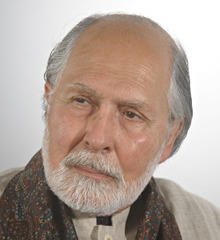
Seyyed Hossein Nasr
Seyyed Hossein Nasr

Seyyed Hossein Nasr is a distinguished Iranian philosopher, intellectual, and scholar of Islamic studies. Born on April 7, 1933, he has made significant contributions to the field of Islamic philosophy and comparative religion. His work emphasizes the importance of understanding Islamic thought in its historical and cultural context. more

You May Also Like

“Too often the achievements of the Islamic civilisation and its strong link to the Western civilisation are limited to scholarly works and academic journals. Moreover, many available works paints a stark picture of confrontation between civilisations when in reality was often one of exchange and mutual dependence.”

“I’m remembering there’s a word in Russian, izgoy, that describes someone with a flaw that makes that person singularly unfit to perform his or her professional role. A blocked writer, I lascivious priest, a drunken chauffeur. As a screwed-up therapist,someone like me should not be working at all. Not yet. It is far too soon. And you can tell that. Bethany, with her Competence Scale, already has. But here I am. An izgoy.”

“Every article and review and book that I have ever published has constituted an appeal to the person or persons to whom I should have talked before I dared to write it. I never launch any little essay without the hope—and the fear, because the encounter may also be embarrassing—that I shall draw a letter that begins, 'Dear Mr. Hitchens, it seems that you are unaware that…' It is in this sense that authorship is collaborative with 'the reader.' And there's no help for it: you only find out what you ought to have known by pretending to know at least some of it already. It doesn't matter how obscure or arcane or esoteric your place of publication may be: some sweet law ensures that the person who should be scrutinizing your work eventually does do so.”

“He sat in the chapel for hours picking his way through fugues. A dozen notes, hardly music. But then those few notes spoke to each other, subject and answer, by repetition, by diminution, by augmentation, even looping backwards on themselves in a course like the retrograde motion of Mars. He listened as if he had as many ears as fingertips, and, like a blind man, could feel textures that were barely there. At the end of two or three pages of music he would hear all the voices twining together in a construction of such dizzying power that the walls of the chapel could barely contain it.”