Quotessence
Home / Quotes / Quote by Charles Dickens

Quote by Charles Dickens

“Christmas time! That man must be a misanthrope indeed, in whose breast something like a jovial feeling is not roused—in whose mind some pleasant associations are not awakened—by the recurrence of Christmas. There are people who will tell you that Christmas is not to them what it used to be; that each succeeding Christmas has found some cherished hope, or happy prospect, of the year before, dimmed or passed away; that the present only serves to remind them of reduced circumstances and straitened incomes—of the feasts they once bestowed on hollow friends, and of the cold looks that meet them now, in adversity and misfortune. Never heed such dismal reminiscences. There are few men who have lived long enough in the world who cannot call up such thoughts any day of the year. Then do not select the merriest of the three hundred and sixty-five for your doleful recollections, but draw your chair nearer the blazing fire—fill the glass and send round the song—and if your room be smaller than it was a dozen years ago, or if your glass be filled with reeking punch, instead of sparkling wine, put a good face on the matter, and empty it offhand, and fill another, and troll off the old ditty you used to sing, and thank God it’s no worse.”

Quote by Charles Dickens

Work

Sketches by Boz Vol. I

Browse quotes and source details for this work. more

Author
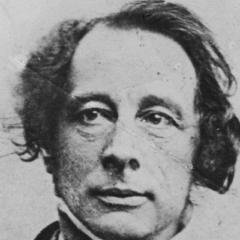
Charles Dickens
Charles Dickens

Charles Dickens, a British writer born on February 7, 1812, and died on June 9, 1870, is one of the greatest novelists of the 19th century. Known for his profound social criticism and vivid narrative style, Dickens' works extensively cover social reality, revealing various issues in the British society of the time. more

You May Also Like

“Historically, psychologists have looked at introversion as the absence of extroversion. They measure extroversion, and if you are low in it, then you are considered an introvert. This perpetuates the perception of introversion as negative space, and introverted activities as not really doing anything. We need to train ourselves, and others, out of this idea. We need to start seeing doing nothing (or reading, or working alone on projects, or whatever it is we do to recharge) as activities that are as valid as any social event.”

“It is understandable if you are struggling to reconcile images of a smooth moving Justin Timberlake singing, “I’m bringing sexy back…” with the experience of working in aged care! Sexy is often everything that aged care is not. But by using the word “sexy” I am not referring to the high octane experience of being intimate with someone. Who knows though, your older adult clients may well want to talk about such things! How senior friendly to encourage this? What I am referring to is bringing the spice or pizzazz associated with respect back to our Western society that appears to have lost its way in valuing seniors.”

“Once we know how observant a person is in terms of church attendance, nothing that we can discover about the content of her religious faith adds anything to our understanding or prediction of her good neighborliness...In fact, the statistics suggest that even an atheist who happened to become involved in the social life of the congregation (perhaps through a spouse) is much more likely to volunteer in a soup kitchen than the most fervent believer who prays alone. It is religious belongingness that matters for neighborliness, not religious believing.”

“Where we stand depends on where we sit." Each of us tends to think we see things as they are, that we are objective. But this is not the case. We see the world, not as it is, but as we are—or, as we are conditioned to see it. When we open our mouths to describe what we see, we in effect describe ourselves, our perceptions, our paradigms. When other people disagree with us, we immediately think something is wrong with them.”

“When psychologists Catherine Caldwell-Harris and Ayse Ayçiçegi compared U.S. and Turkish samples, they found that having "an orientation inconsistent with societal values" is a risk factor for poor mental health. The findings support what the researchers call the personality-culture clash hypothesis: "Psychological adjustment depends on the degree of match between personality and the values of surrounding society." To the extent that introverts feel the need to explain, apologize, or feel guilty about what works best for them, they feel alienated not only from society but from themselves.”

“Psychic change, as Todorov has recognized, subverted the genre in another way, by revoking the cultural taboos, the social censorship, that had prohibited the overt treatment of psychosexual themes, which then found covert expression in the supernatural tale. 'There is no need today to resort to the devil [or to posthumous reverie] in order to speak of excessive sexual desire, and none to resort to vampires in order to designate the attraction exerted by corpses: psychoanalysis, and the literature which is directly or indirectly inspired by it, deal with these matters in undisguised terms. The themes of fantastic literature have become, literally, the very themes of the psychological investigations of the last fifty years.”