Quotessence
Home / Quotes / Quote by George Gissing

Quote by George Gissing

Work

The Odd Women

A classic work that delves into the personal struggles and societal challenges faced by women who do not conform to traditional roles during the Victorian era. more
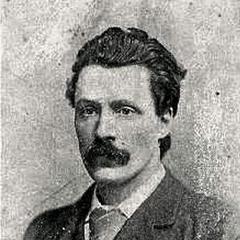
Author

George Gissing
George Gissing

George Gissing was an English novelist known for his profound depiction of the lives of the working class. His works often focus on the struggles of the lower class and critical reflections on Victorian British society. more

You May Also Like

“[Florence Nightingale's] sister's condition was all too common among many a well-off spinster, 'condemned to spend her days in a meaningless round of trivial occupations, which ate away at her vital strength.' Parthenope's illness, Florence thought, was simply caused by boredom, 'by the conventional life of the present phase of civilisation, which fritters away all that is spiritual in women.' Watching Parthenope lose her sanity, her strength, even the ability to walk, had left Florence aghast. She observed that all around her women were 'going mad for the want of something to do'. She was determined to avoid this fate for herself.”

“There is no denying that these women had hard lives, but care needs to be taken with these articles about them because they were written in a Victorian genre known as 'slumming', a semi-salacious relishment of the misfortunes of lower-class people.”

“While Alice had played her part in watching, waiting and attending on her father, Victoria herself hadn't been much use. ... Alice wasn't a trained nurse, but ... tradition and convention insisted in any case that a daughter was better than the most professional nurse available. (Tradition and convention were wrong about this, as Victoria herself later admitted.)”

“Victoria, who lacked a father, had long sought mentors or alternative fathers in Uncle Leopold, Melbourne and then in Albert himself. Yet she couldn't get him to listen to her. It was in any case, a vain hope. A Victorian man was failing in his masculinity if he failed to control his wife, and Albert could never quite control a wife who was also a queen. So they were doomed to clash.”

“What can appear to us twenty-first century people to be an unhealthy fascination with death and mourning in Victorian culture may in fact have been a source of powerful mental resilience. They were 'in touch' with birth and death. Today grieving and mourning are perceived as weakness, almost sickness, to be conquered and overcome. It might be better to accept bereavement, as the Victorians did, as an integral part of life.”

“Victoria's former governess Laddle perceptively noticed that the queen's grief would be worse because 'she has no friend to turn to'. 'The worst, far the worst,' Laddle continued, 'is yet to come - the numberless, incessant wishes to "ask the Prince," to "Send for the Prince", the never-failing joy, fresh every time, when he answered her call ... he greatest delight was in OBEYING him.”

“A species of madness' had come upon her, [Dr Clark] claimed ... but these fears were greatly amplified by the fact that Victoria was approaching that time of life when Victorian women in general were believed to lose control of themselves: the menopause. ... Menopausal women, contemporary doctors hinted, would become sex maniacs.”