Quotessence
Home / Quotes / Quote by Anthony Burgess

Quote by Anthony Burgess

Work

A Clockwork Orange

A novel set in a dystopian future where the protagonist, Alex, is a violent teenager. The story delves into the consequences of his actions and the societal implications of his transformation through an experimental conditioning procedure. more
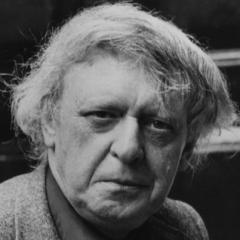
Author

Anthony Burgess
Anthony Burgess

Anthony Burgess, born on February 25, 1917, in Manchester, England, was an accomplished British writer known for his distinctive literary style and profound insights into human psychology. His works spanned various literary genres, including novels, plays, and poetry. Burgess' most famous novel, A Clockwork Orange, is one of the most celebrated works of the 20th century, exploring themes such as free will, morality, and social control. more

You May Also Like

“When there is mutual shadow projection between individuals, groups, or nations, each side has an unconscious investment in the other playing out the projected evil so as to prove their own self-righteous innocence. What ensues is a vicious cycle that ensures that neither side has to look at their own darkness. This dynamic fastens the two sides together, as if in their mutual projections there is an elastic band tying them together, and this dynamic becomes self-reinforcing. As such, it gives both parties clear justification to feel victimized by the other as well as continually feeding the diabolical polarization in the field.”

“To the possible objection that thus the world would of necessity have long ago turned into a paradise, it is easy to reply: Many substances already may have attained great perfection; yet, the continuum being infinitely divisible, there will always remain in the unfathomable depth of the universe some somnolent elements which are still to be awakened, developed, and improved - in a word, promoted to higher culture. This is why the end of progress can never be attained.”

“Take the case (to use an easy example) of a river, carrying boats and communicating to them its own velocity, yet limited by their own inertia so that, all the rest being equal, the more heavily loaded will be carried more slowly. Hence it can be stated that the speed of the boats comes from the river, the slowness, from the load; the positive, from the force of the propelling agent, the privative, from the inertia of the propelled. Quite in the same manner it may be said that God contributes to the creatures their perfections, yet is limited by their receptivity. Thus all goods are due to the divine force; the evils, to the torpor of the creature.”