Quotessence
Home / Quotes / Quote by David Wojnarowicz

Quote by David Wojnarowicz

Work

Close to the Knives: A Memoir of Disintegration

This memoir delves into the author's experiences of personal breakdown and subsequent healing, offering a candid look at the complexities of human emotion and the journey towards self-discovery. more

Author
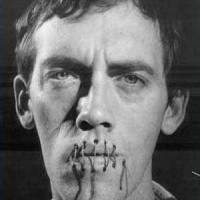
David Wojnarowicz
David Wojnarowicz

David Wojnarowicz was an American artist, photographer, and writer, known for his work that addresses themes of AIDS, queer identity, and the political and social issues of his era. His art often took the form of performance, photography, and writing, and he was a prominent figure in the New York art scene of the 1980s and 1990s. more

You May Also Like

“The United States is utopia embodied. You should not judge their crisis in the same way as we judge ours – the crisis of the old European countries. We have a crisis of historical ideals caused by the impossibility of realizing them. They have a crisis of a realized utopia as a consequence of its duration and continuity. The idyllic conviction of Americans that they are the center of the world, a higher power and an absolute role model is not such a delusion. It is based not so much on technological resources and military forces as on a miraculous belief in the existence of an embodied utopia – a society that, with what it may seem unbearable innocence, is based on the idea that it has achieved everything that others only dreamed of: justice, abundance, rights, wealth, freedom; America knows it, it believes it, and in the end, others also believe it.”

“the postmodern trajectory itself is a rather humorous joke on the human race which laboured for millennia to reduce working hours in order to produce leisure so we could enjoy this very leisure that then turns in a kind of vengeful act against us absorbing our leisure time, which was to be our living time, into time now spent in the service of what can only be called this inhuman spectacle”

“It is like truth according to Nietzsche: we no longer believe that the truth is true when all its veils have been removed. Similarly, we do not believe that war is war when all uncertainty is supposedly removed and it appears as a naked operation. The nudity of war is no less virtual than that of the erotic body in the apparatus of striptease.”

“Baudrillard argues that there used to be a time when the role of objects was primarily to signify rather than to function. Thus, the symbolic structure of the traditional domestic ambience reflected the rituals and traditions of the socio-political order, arranged according to prescriptive and unchanging rules based on, and extracted from, ‘tradition and authority, and whose heart is the complex affective relationship that binds all the family members together […] Hence, the fixed and immovable meanings with which these objects were endowed: if mirrors and family portraits symbolized a particular sense of introspection and enclosure, the clock crowning the marble mantelpiece symbolized both the hierarchical structure of the family and the permanence of time. Linked to one meaning and one meaning only, every object of the traditional domestic interior can thus be understood as theatrical and ceremonial, thus occupying a specific place within the domestic interior exactly as family members occupy a specific position in their corresponding family tree.”