Quotessence
Home / Quotes / Quote by Al Pacino

Quote by Al Pacino

“Every few blocks were vacant lots where victory gardens had been planted at the height of the war. By then, they were wrecked and full of debris. Once in a while, when you looked down at the sidewalk along the lots, you’d see a blade of grass growing up out of the concrete. That’s what my friend, the acting teacher Lee Strasberg, once called talent: a blade of grass growing up out of a block of concrete.”

Quote by Al Pacino

Work

Sonny Boy: A Memoir

Browse quotes and source details for this work. more

Author

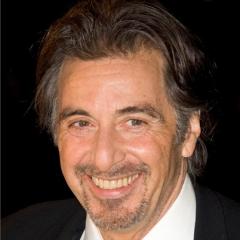
Al Pacino
Al Pacino

Al Pacino, born on April 25, 1940, is a renowned American film actor. He is best known for his outstanding performances in classic films such as 'The Godfather' series and 'Dog Day Afternoon'. Pacino's acting has been highly acclaimed, earning him multiple Academy Award nominations for Best Actor. more

You May Also Like

“It was the American middle class. No one's house cost more than two or three year's salary, and I doubt the spread in annual wages (except for the osteopath) exceeded more than five thousand dollars. And other than the doctor (who made house calls), the store managers, the minister, the salesman, and the banker, everyone belonged to a union. That meant they worked a forty-hour week, had the entire weekend off (plus two to four weeks' paid vacation in the summer), comprehensive medical benefits, and job security. In return for all that, the country became the most productive in the world and in our little neighborhood it meant your furnace was always working, your kids could be dropped off at the neighbors without notice, you could run next door anytime to borrow a half-dozen eggs, and the doors to all the homes were never locked -- because who would need to steal anything if they already had all that they needed?”

“If it is asserted that civilization is a real advance in the condition of man — and I think that it is, though only the wise improve their advantages — it must be shown that it has produced better dwellings without making them more costly; and the cost of a thing is the amount of what I will call life which is required to be exchanged for it, immediately or in the long run.”