Quotessence
Home / Quotes / Quote by Ted Grant

Quote by Ted Grant

“When you photograph people in color, you photograph their clothes. But when you photograph people in Black and white, you photograph their souls!”

Quote by Ted Grant

Author
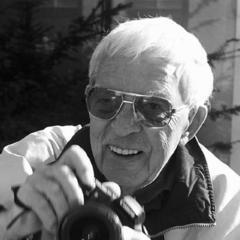
Ted Grant
Ted Grant

Ted Grant, a British Marxist and a significant figure in the international communist movement, was born on July 9, 1913, and passed away on July 20, 2006. He played a crucial role in the communist movement in the mid-20th century, particularly in Britain and Latin America. more

You May Also Like

“One of the most famous enemies of Soviet communism is Vladimir Bukovsky. He was tortured by Soviet authorities and spent many years in Soviet prisons. He was even declared “insane” and sent to a psychiatric prison. When Bukovsky was exiled to the West, people paid lip service to his courage; but few heeded his warnings about Gorbachev’s Perestroika. Bukovsky reminded everyone that all Soviet leaders were liars. Gorbachev, he said, was no exception—and was certainly no democrat. Like Lenin, Stalin, Khrushchev, and Brezhnev, Gorbachev was a liar and a hangman. But hardly anyone listened. Everyone wanted to believe the Cold War was over.”

“Bukovsky reminded everyone that all Soviet leaders were liars. Gorbachev, he said, was no exception—and was certainly no democrat. Like Lenin, Stalin, Khrushchev, and Brezhnev, Gorbachev was a liar and a hangman. But hardly anyone listened. Everyone wanted to believe the Cold War was over. But how could we have won the Cold War? This was the inconvenient question Bukovsky asked. Random House senior editor Jason Epstein rejected Bukovsky’s question altogether. And so, Bukovsky’s book on the equivocal “fall of communism” was not published in English—until now.”

“Gorbachev’s injunctions to go ‘back to Lenin’, to ‘socialism with a human face’, his yearning to uncover some constitutive humanism in the origins of Communist ideology, elicited no response except insofar as they offered a convenient form of protest, and then only so long as people feared and believed in the durability of Communism, and remained afraid to express themselves openly. In order to implement his plan to democratize the Soviet state while preserving its ideological heritage, Gorbachev needed a certain number of people who understood his calls not as mere rhetoric, but as literal and sincere. These people never appeared.”

“Gorbachev's greatest problem, which ultimately became a problem for the U.S.S.R., was his irresolution and the half-heartedness of his actions. He wanted to be a reformer but was deeply anxious about the consequences of real reform. He would herald great changes, only then to try to avert them. He partly opened the door to freedom, but when everybody tried to rush through, he jammed his foot against it and then pushed with all his weight to stop the door from opening any further. The trouble was that what people wanted was a fully open door, not a chink they could peep through. My mother and I would binge-watch the new broadcasts that broke through the old censorship rules and were aired thanks to Gorbachev's glasnost. We were outraged by any hint that he, with the help of Leonid Kravchenko, his loathsome head of the Soviet State Committee for TV and Radio Broadcasting, was trying to rein in freedom of speech and clutch at the remnants of censorship. Appreciation of his having allowed freedom of speech was instantly overshadowed a hundredfold by indignation that he was not allowing it in full. I well remember the angry outbursts in our family: For heaven's sake, fire your wretched Kravchenko. Can't you see that's what the whole country wants and that it will back you? Gorbachev's affection for his wife, which today is seen as sweet, was met with daggers drawn by a patriarchal and backward Soviet society. "He's henpecked. Trailing along after his wife again." That too caused a fall in his popularity.”

“The criticisms made of Gorbachev-that he was indecisive, spineless, lily-livered, half-hearted, evasive-were all true. Just as it was true that he earned them all in his opposition to the radical democrats, whom I idolized at the time. The camp of those who hated Gorbachev was divided between those who did not like the reforms and those who did not like the fact that he was introducing them too slowly. The latter, to whom I belonged, hated him much more fervently: we had a goal we could see elsewhere-complete freedom of speech, capitalism, and democracy-and that made us active critics hammering away. We also deprived Gorbachev of support from the only section of society he could count on. So when, in his own good time, having missed every opportunity, he ceased to be afraid and ran for office (before that, he had been elected only by collegial bodies like congresses and supreme soviets whose subordinate status removed the risk of losing), he gained a derisory 0.51 percent of the vote. The older I grew, the more intolerant I became of Gorbachev, but now I view him positively, if only because he proved completely incorruptible. In that he was unique. Everyone who had power during the transition from socialism to capitalism tried to grab as big a slice of the pie as they could. The Communist leaders of the central Asian republics of the U.S.S.R. became owners of entire countries and promptly turned them into totalitarian states. Ministers scooped up whole industries for which they had responsibility. Directors of factories found ingenious ways of becoming their owners. Nimble-footed members of the Young Communist League, whose resonant voices had vowed their preparedness to give their lives for the party, now employed their influence and connections to become oligarchs. When Gorbachev stepped down as president, he took nothing with him, though there had been colossal opportunities for him to get rich. No one would have blinked an eye if a couple of major factories had somehow been transferred to offshore companies under the guise of "joint ventures." He could have helped himself to state property abroad. It would have been so easy to siphon party money into personal accounts. He did none of that. People can argue as much as they like that it was because he did not have the opportunity, but the fact remains that he made no attempt to do so. In my view, that was because he was a different kind of person. Not avaricious.”