“Bradley Headstone, in his decent black coat and waistcoat, and decent white shirt, and decent formal black tie, and decent pantaloons of pepper and salt, with his decent silver watch in his pocket and its decent hair-guard round his neck, looked a thoroughly decent young man of six-and-twenty. He was never seen in any other dress, and yet there was a certain stiffness in his manner of wearing this, as if there were a want of adaptation between him and it, recalling some mechanics in their holiday clothes. He had acquired mechanically a great store of teacher's knowledge. He could do mental arithmetic mechanically, sing at sight mechanically, blow various wind instruments mechanically, even play the great church organ mechanically. From his early childhood up, his mind had been a place of mechanical stowage. The arrangement of his wholesale warehouse, so that it might be always ready to meet the demands of retail dealers history here, geography there, astronomy to the right, political economy to the left—natural history, the physical sciences, figures, music, the lower mathematics, and what not, all in their several places—this care had imparted to his countenance a look of care; while the habit of questioning and being questioned had given him a suspicious manner, or a manner that would be better described as one of lying in wait. There was a kind of settled trouble in the face. It was the face belonging to a naturally slow or inattentive intellect that had toiled hard to get what it had won, and that had to hold it now that it was gotten. He always seemed to be uneasy lest anything should be missing from his mental warehouse, and taking stock to assure himself.”
Quote by Charles Dickens
Work
Charles Dickens' 'Our Mutual Friend' is a complex narrative that delves into the lives of various characters connected by a mysterious bequest. The story is set in the bustling streets of Victorian London, where themes of wealth, poverty, and the corrupting influence of money are prominent. Dickens' intricate plot weaves together the fates of different individuals, each with their own struggles and desires, as they navigate the moral and social landscape of the era. more
Author
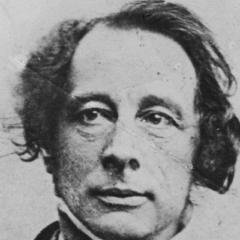
Charles Dickens, a British writer born on February 7, 1812, and died on June 9, 1870, is one of the greatest novelists of the 19th century. Known for his profound social criticism and vivid narrative style, Dickens' works extensively cover social reality, revealing various issues in the British society of the time. more
You May Also Like
“Character is standing tall and guiding others.”
“A man who is good from docility, and not from stern self-control, has no character.”
“It is character that communicates most eloquently.”
“Association with other people corrupts our character; especially when we have none.”