Quotessence
Home / Quotes / Quote by Ludwig Wittgenstein

Quote by Ludwig Wittgenstein

Author

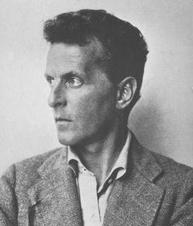
Ludwig Wittgenstein
Ludwig Wittgenstein

Ludwig Wittgenstein was one of the most important philosophers of the 20th century, renowned for his profound contributions to language, logic, and philosophical methods. His ideas have had a significant impact on the development of analytic philosophy and philosophy of language. more

You May Also Like

“In philosophy, metaphorical pluralism is the norm. Our most important abstract philosophical concepts, including time, causation, morality, and the mind, are all conceptualized by multiple metaphors, sometimes as many as two dozen. What each philosophical theory typically does is to choose one of those metaphors as "right," as the true literal meaning of the concept. One reason there is so much argumentation across philosophical theories is that different philosophers have chosen different metaphors as the "right" one, ignoring or taking as misleading all other commonplace metaphorical structurings of the concept. Philosophers have done this because they assume that a concept must have one and only one logic. But the cognitive reality is that our concepts have multiple metaphorical structurings.”

“The most flattering spin I can put on this phase of paradoxes and metaphysical tangles is that I was smart enough, at age fourteen, to destroy any fledgling hypothesis I came up with. A tentative explanation, theory, or formulation would pop up in my brain only to be attacked by what amounted to a kind of logical immune system, bent on eliminating all that was weak or defective. Which is to say that my mind had become a scene of furious predation, littered with the half-eaten corpses of vast theories and brilliant syntheses.”

“Live, you say, in the present; Live only in the present. But I don’t want the present, I want reality; I want things that exist, not time that measures them. What is the present? It’s something relative to the past and the future. It’s a thing that exists in virtue of other things existing. I only want reality, things without the present. I don’t want to include time in my scheme. I don’t want to think about things as present; I want to think of them as things. I don’t want to separate them from themselves, treating them as present. I shouldn’t even treat them as real. I should treat them as nothing. I should see them, only see them; See them till I can’t think about them. See them without time, without space, To see, dispensing with everything but what you see. And this is the science of seeing, which isn’t a science.”

“I suppose it's impossible to say that they will not invent anything else, because they might," said Zubria. "And, of course, if one thought of something that they might invent, one would have thought of it oneself, therefore one would be the inventor of what one thought of, and they would not be, which would make one an inventor, like them.”

“I expected, as I approached the corporate world, to enter a brisk, logical, nonsense-free zone, almost like the military - or a disciplined, up-to-date military anyway - in its focus on concrete results. How else would companies survive fierce competition? But what I encountered was a culture riven with assumptions unrelated to those that underlie the fact- and logic-based worlds of, say science and journalism - a culture addicted to untested habits, paralyzed by conformity, and shot through with magical thinking.”