Quotessence
Home / Quotes / Quote by James Salter

Quote by James Salter

Work

The Hunters

The story follows a diverse group of hunters as they embark on a perilous quest, facing both external dangers and internal conflicts. Their motivations and personal struggles are woven into a narrative that explores themes of survival, teamwork, and the human spirit. more
Author

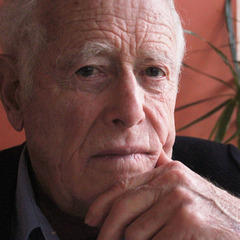
James Salter
James Salter

James Salter, born on June 10, 1925, was an influential American novelist known for his concise and profound writing style. His works, which cover themes such as love, war, and human nature, are considered classics of American literature. Salter's notable works include 'Last Summer' and 'Alaska'. more

You May Also Like

“What if love wasn’t a mysterious “thing” that capriciously attached itself to whomever it willed? Could it be instead a deliberate choice of action? Jesus had commanded His followers to “love one another.” Would He give such a commandment if people had no control over their ability to love? And does that mean that romantic love between a man and woman can be cultivated, just as Mrs. Kingston cultivates her roses? She recalled standing at a window facing the Anwyl and determining that, like Saint Paul, she would learn contentment. If contentment could be achieved through an act of will, then why couldn’t love? And it would seem that a love purposely cultivated for a man because of his kind nature and comforting ways would eventually grow stronger and deeper than one based on mere physical attraction.”

“Chloe's holiday story was dull, but its dullness was no longer a criterion of judgment. I'd ceased to consider it according to the secular logic of ordinary conversations. I was no longer concerned to locate within its syntax either intellectual insight or poetic truth. What mattered was not so much what she was saying , as the fact, she was saying it. And that I had decided to find perfection in everything she might choose to utter. I felt ready to follow her into every anecdote, I was ready to love every one of her jokes that had missed its punchline, every reflection that had lost its thread. (...) I felt ready to abandon self-absorption for the sake of total empathy, to follow Chloe into each of her possible selves, to catalog every one of her memories, to become a historian of her childhood, to learn of all her loves, fears and hatreds... everything that could possibly have played itself out within her mind and body had suddenly grown fascinating.”

“To see you is to forget my name. To forget this tight collar and that delayed train. To forget the conflict with the landlady and the worry that my students won’t like me. These trifles lose themselves in the valleys of your brows and the seas of your hair. To see you is to forget my name. To forget if it matters what I do and whether what I do matters. To forget who I think I am and who I think I ought to become. To forget every past moment and unremember every moment to come. To see you is to forget my name. To forget myself and forget the world. These trivialities drown themselves in the dark eyes that stare back at me. Because to see you is to see you. Only you.”