Quotessence
Home / Quotes / Quote by Anthony Trollope

Quote by Anthony Trollope

“Poor Mr. Smith, having been so rudely dragged from his high horse, was never able to mount it again, and completed the lecture in a manner not at all comfortable to himself.”

Quote by Anthony Trollope

Work

Framley parsonage

This novel, set in the picturesque English countryside, delves into the lives of the inhabitants of Framley Parsonage. It examines the complexities of social class and the intricate relationships between characters, offering a rich tapestry of rural life and human interaction. more
Author

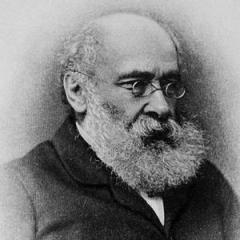
Anthony Trollope
Anthony Trollope

Anthony Trollope was an English novelist known for his detailed portrayals of Victorian British society. His works often centered around political and administrative themes, showcasing his profound insights into social structures and class divisions. more

You May Also Like

“I’ve already learned the poem! I have! Listen!” And five-year-old Peter recited it boldly, without a single pause. His parents were stunned. Danylo considered himself a well-educated man. He had once completed a parish school, later pursued self-education diligently, and through natural intelligence and perseverance had become a skilled accountant. Yet to memorize such a poem casually, in play, having heard only fragments of it? No — such heights had always been beyond him. With a mingled feeling of joy, pride, and astonishment, the father studied his son. For the first time, he saw in this mischievous boy an heir — one who had inherited the best traits of his ancestors and might one day surpass even his boldest expectations. “Maria,” Danylo said to his wife, “let’s send Peter to school, even if it’s still early — let him study alongside his older brother Nick. He’s capable, he’s bright, he’ll manage. After all, no one knows what the future may bring.” — Volodymyr Shablia, Stone. Book One Context note: In a fragile post-war society where education was uncertain and the future unpredictable, a father recognizes early brilliance in his son — a moment when hope quietly overcomes fear, and destiny begins to take shape.”

“Every novel says to the reader: “Things are not as simple as you think.” That is the novel’s eternal truth, but it grows steadily harder to hear amid the din of easy, quick answers that come faster than the question and block it off. In the spirit of our time, it’s either Anna or Karenin who is right, and the ancient wisdom of Cervantes, telling us about the difficulty of knowing and the elusiveness of truth, seems cumbersome and useless.”