Quotessence
Home / Quotes / Quote by Terry Pratchett

Quote by Terry Pratchett

Work

Witches Abroad

Browse quotes and source details for this work. more
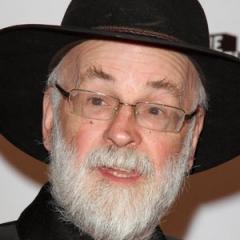
Author

Terry Pratchett
Terry Pratchett

Terry Pratchett was a British author renowned for his fantasy novel series, 'Discworld'. His works are appreciated for their unique humor and profound philosophical insights. Pratchett's contributions to literature extend beyond fantasy, encompassing science fiction, humor, and children's literature. more

You May Also Like

“The butterflies were performing circus tricks now, flying through hoops of fire. Lexi had read about infatuation once. Some writer had doused the romantic notion of winged insects. He'd said the funny feeling was simply the motion of common sense fleeing the body. It made more sense, in a world where few things did. Lexi smiled, reveling in the feeling.”

“So it's 2019. I'm gonna say the right thing to do is for the US to declare bankruptcy (Trump can do it… done it before…), and dismantle the criminal state of Israel as it exists today. Unfortunately, politicians are so full of shit and AIPAC money, and the economy is so addicted to war, and the US population is so fucking stupid... that we’ll probably have to go and try to fuck up another two or three countries before moving on to a decent, honest life.”

“Or, to choose another example, we feel that freedom of speech is the last step in the march of victory of freedom. We forget that, although freedom of speech constitutes an important victory in the battle against old restraints, modern man is in a position where much of what "he" thinks and says are the things that everybody else thinks and says; that he has not acquired the ability to think originally—that is, for himself—which alone gives meaning to his claim that nobody can interfere with the expression of his thoughts. Again, we are proud that in his conduct of life man has become free from external authorities, which tell him what to do and what not to do. We neglect the role of the anonymous authorities like public opinion and "common sense," which are so powerful because of our profound readiness to conform to the expectations everybody has about ourselves and our equally profound fear of being different. In other words, we are fascinated by the growth of freedom from powers outside of ourselves and are blinded to the fact of inner restraints, compulsions, and fears, which tend to undermine the meaning of the victories freedom has won against its traditional enemies. We therefore are prone to think that the problem of freedom is exclusively that of gaining still more freedom of the kind we have gained in the course of modern history, and to believe that the defense of freedom against such powers that deny such freedom is all that is necessary. We forget that, although each of the liberties which have been won must be defended with utmost vigor, the problem of freedom is not only a quantitative one, but a qualitative one; that we not only have to preserve and increase the traditional freedom, but that we have to gain a new kind of freedom, one which enables us to realize our own individual self, to have faith in this self and in life.”