“Enlightenment is man's emergence from his self-imposed immaturity. Nothing is required for this enlightenment except freedom; and the freedom in question is the least harmful of all, namely, the freedom to use with and publicly in all matters.”
Quote by Immanuel Kant
Work
Critique of pure reason
Immanuel Kant's 'Critique of Pure Reason' delves into the limits and possibilities of human understanding, examining the nature of space, time, and causality, and the role of intuition and concepts in shaping our experience of the world. more
Author
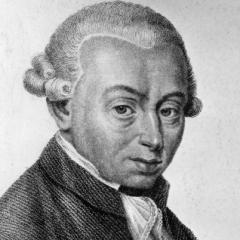
Immanuel Kant
German philosopher, an important representative of the Enlightenment movement, and the founder of the Kantian philosophical system. His thoughts have had a profound impact on the fields of philosophy, ethics, political science, and others. more
You May Also Like
Source: The Mute's Soliloquy: A Memoir
“Reason is inherently expansionist. It seeks universal application.”
Source: The expanding circle: ethics and sociobiology
Source: HOW GREEN WAS MY VALLEY
Source: Steppenwolf
Source: The BlueStocking Girl
“I always have my reasons, even when I don't know what they are.”