Quotessence
Home / Quotes / Quote by Sarah Ferguson

Quote by Sarah Ferguson

Work

Victoria and Albert: A Family Life at Osborne House

Browse quotes and source details for this work. more

Author
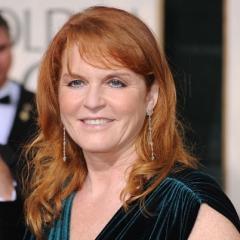
Sarah Ferguson
Sarah Ferguson

Sarah Ferguson is a British writer born on October 15, 1959. Her works span a variety of genres, including novels, biographies, and children's literature. Ferguson is known for her unique narrative style and in-depth character development. more

You May Also Like

“Love addicts often pick partners who are emotionally unavailable because deep down, they don’t feel worthy of having a healthy, loving relationship. A love addict craves and obsesses about becoming enmeshed or ‘one’ with another human being at all costs, even if it means putting themselves in potential danger.”

“Mental stories can literally spoil a human life. It took me a long time to become aware of my mental commentary, such as: “Everything always goes wrong”, “I won’t be accepted”, “I’m a failure” or “What’s the point?” Those fears were deep-rooted and triggered many upsetting addictive patterns of behaviour”

“When we practise self-compassion, we look after ourselves just as though we are nurturing a small child. In fact, a major part of grieving our original pain work (so that we can heal and be emotionally liberated) is to re-parent ourselves and reconnect with our inner child. This is what the author, John Bradshaw, meant by ‘reclaiming our inner child’. In recovery, we can begin to nurture our inner child and connect deeply with our heart and spirit.”

“Isms’ are described as transference of addictive patterns of dysfunctional behaviour, passed down from generation to generation. For instance, if a mother was an alcoholic who never made it into recovery, her behaviour would leave a mark on her children, husband, etc. Unless her adult children join some sort of recovery programme and adopt the mindfulness practice, they will have very similar behaviour traits to their mother but minus the alcohol abuse. There is a strong possibility that they will become codependent and form relationships with other codependents or alcoholics.”

“I don’t think I’ve ever met an addict in long-term recovery who hasn’t gone through at least one traumatic childhood experience. Research indicates that one traumatic event in childhood is as grave as continuous combat in a war zone. A traumatic event during childhood can leave a grave imprint on the human body.”

“No one can control their results. We can, however, control our attitude. When we practise compassion, it is most effective when it is unconditional and free from seeking an outcome – compassion is a matter of choice rather than a self-seeking action. And so, if we assist another human being from a place of presence and compassion, we are not looking to find our happiness off the back of others’ suffering. Nor are we trying to control them. Compassion is a conscious choice rather than an emotional knee-jerk reaction.”